The Benefits of Sober Living Homes: What Residents and the Recovery Community Gain
Where someone lives after treatment matters as much as the treatment itself. We cover what a sober living home is and nine specific ways these houses change outcomes for residents and for the wider recovery community. We cover what living in a structured house actually looks like day to day, what sober living costs a resident, and whether sober living homes are profitable to operate.
Ask anyone who has rebuilt a life after alcohol or drug addiction: where you live after treatment matters as much as treatment itself.
Sober living homes exist for exactly that reason. Our behavioral health consulting team helps launch recovery housing nationwide, and the benefits of sober living show up in every community that adds it.
The most significant benefits compound; this chapter covers them all.
What Is a Sober Living Home?
A sober living home is a shared house where people recovering from drugs and alcohol live together in a structured, substance-free setting.
Housemates pay their own living expenses, follow house rules, and support each other's recovery. Most have completed inpatient treatment or other rehabilitation programs before moving in.
Sober living is not a substitute for medical or clinical treatment. It is the bridge between alcohol or drug treatment and independent life, and stable housing is one of the four major dimensions of recovery for good reason.
Most sober living homes are privately run and self-supporting rather than government-funded: housemates cover costs and community holds the structure.
Sober Living Homes vs Halfway Houses
People confuse sober living houses with halfway houses, but they differ in funding, supervision, and purpose.
Halfway houses are often government-funded and linked to the criminal justice system, with time limits, program requirements, and mandated placement. Sober homes are voluntary, privately operated, and focused purely on peer-led addiction recovery, usually with a house manager rather than staff.
If the court-connected model is the one you want to operate, our guide on how to start a halfway house covers that path.
The Four Levels of Recovery Housing
Not every sober living home is the same. Quality and services vary, which is why NARR sorts recovery residences into four levels.
Level one sober homes offer peer support without paid staff. Level two adds a house manager. Level three sober homes include peer coaching and supervision; level four integrates clinical services.
All levels share one rule: alcohol free and drug free, always. The right level depends on your recovery needs.
The Benefits of Sober Living: 9 Ways Sober Homes Change Lives
Why do treatment providers, families, and courts keep choosing them? Here are the benefits of sober living homes we see again and again.
1. A Structured Sober Environment
The benefits start with the environment itself: a home where drugs and alcohol are simply not present.
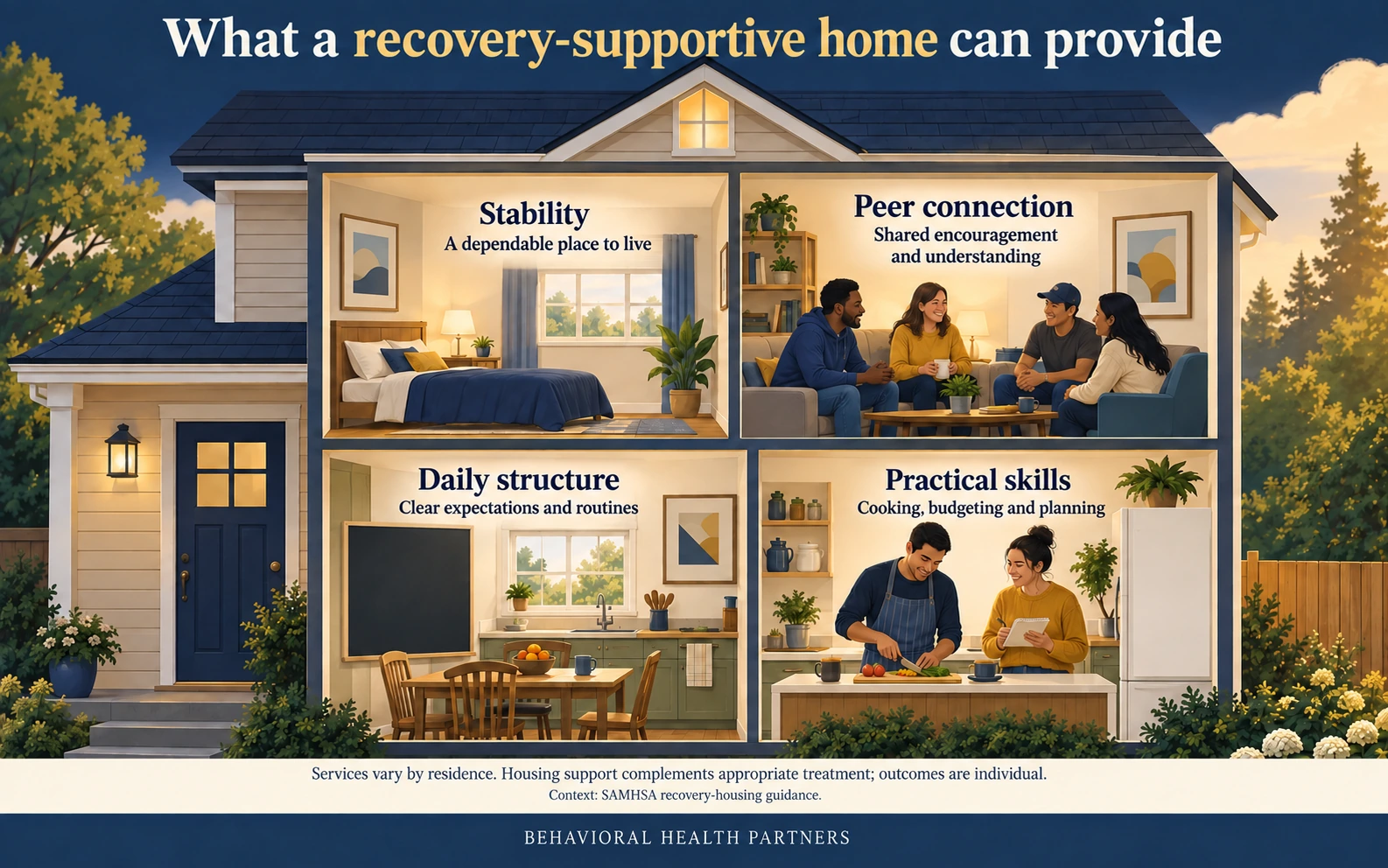
Traditional housing lacks accountability mechanisms and peer support; a sober environment removes the daily negotiation with temptation, and structure fills the hours substance abuse owned.
Fresh out of inpatient treatment, that structure is the difference between momentum and free fall.
2. Accountability That Holds
Sober living homes emphasize accountability: alcohol and drug testing, curfews, chores, and shared expectations.
Accountability is not punishment. It is scaffolding for rebuilding self-trust, one kept commitment at a time, building habits that hold sobriety long term.
3. Peer Support From People Who Get It
Recovery is brutal alone. A sober living house provides a built-in support system of people walking the same recovery journey.
Housemates celebrate milestones, spot warning signs early, and speak recovery without translation, attending daily 12-step meetings and outside support groups together.
The house doubles as a hub of recovery resources: meetings, sponsors, rides, referrals.
That network plays a significant role in why houses work where willpower fails.
4. Life Skills for Daily Life
Addiction interrupts adulthood. Sober living restores it through life skills training built into the routine.
Residents cook, clean, budget, hold jobs, and manage schedules; financial responsibility returns one rent payment at a time.
Life skills sound small until you meet a person struggling to rebuild them. The house is where daily life gets practiced safely.
5. Mental Health and Clarity
Sobriety clears the fog. Residents often experience better mental clarity within weeks, and mental well-being follows, along with the headspace to use therapy and coping skills.
Structured sober housing also supports people managing anxiety, depression, and other mental health issues alongside substance abuse.
For those with co-occurring mental health disorders, the stability compounds everything treatment started.
6. Physical Health and a Sober Lifestyle
A sober lifestyle rebuilds the body too. Without alcohol, sleep returns, real meals return, and improved physical health and nutrition follow.
Houses encourage exercise, and returning energy becomes its own motivation to maintain the sober lifestyle.
7. Better Relationships With Family and Loved Ones
Addiction damages every relationship. Living sober helps residents form deeper, more meaningful relationships and repair the ones that matter.
Family members watch consistency replace chaos; trust rebuilds on evidence: sobriety, kept promises, honest conversations.
New friends come with the house, often the first friends made entirely without substances.
8. Employment and Financial Stability
Living in a sober living home improves employment and financial stability, and the research agrees.
Residents work, save, and pay their own way. Paying living expenses on time becomes proof that independence is real, and self-esteem grows on the same evidence.
For many, it is the first financial footing in years.
9. Lower Relapse Rates and Positive Outcomes
The strongest case is evidence: research on sober living houses links recovery housing with decreased alcohol and drug use, lower relapse rates, and better employment.
The many benefits stack into positive outcomes: the longer someone maintains engagement, the stronger the odds of long term sobriety.
It is why the recovery community keeps building, and why reducing addiction stigma matters in every neighborhood with a house.
What Living Sober in a Structured House Looks Like
Living sober inside sober living houses follows a rhythm: different houses run different rules, but the core is consistent.
Housemates abstain from alcohol and drugs completely. Curfews are enforced, sign-out sheets are common, and everyone participates in house meetings.
Most houses require work, school, or recovery programs by day, and many discourage intimate relationships between housemates early on. Everyone maintains the house together: chores, meals, standards.
The structure protects what everyone came for: the chance to stay sober long enough for a new life to take hold.
How Much Does Sober Living Cost?
Sober living home costs range from $500 to $5,000 monthly, and most sober living homes charge between $450 and $750 per month.
Costs vary by location, amenities, and support levels. Luxury sober living houses can run over $2,000 per week.
Compare that to clinical care; our breakdown of how much does rehab cost shows sober living as the most affordable rung on the ladder.
For a person rebuilding from alcohol addiction or substance abuse, it is structure at rent-money prices.
Are Sober Living Homes Profitable?
Yes, and the question is where resident and operator interests align: a full house maintaining sobriety is a healthy community and a healthy business.
Well-run sober living houses reach 20 to 35% operating margins as demand keeps growing. Our complete guide on how to start a sober living home covers the path and the economics.
Operators who build well do well; better, they give the local recovery community the essential support that makes long term recovery possible for people struggling most.
Most sober living homes have no fixed time limit. You stay as long as you pay your share, follow the rules, and maintain sobriety; many stay 6 to 12 months. Research suggests longer stays support continued sobriety, so good houses encourage people to leave when ready, not on a calendar.
What are the rules of a sober living home?
Every house sets its own, but the core repeats: complete abstinence from alcohol and drugs, testing, curfews, house meetings, chores, and work or outside programs. Many houses restrict overnight guests and discourage new romantic relationships early in the recovery process. The rules protect the sobriety of the whole house.
Is sober living the same as treatment?
No. Sober living provides housing, structure, and support, not clinical care. Most housemates attend outpatient treatment, therapy, or support groups while living in the house. Think of it as the stable home base that makes treatment stick: people recovering from substance use disorders keep community support while rebuilding independent life.
Adam Vibe GuntonFounder and Managing Partner, Behavioral Health Partners
Adam Vibe Gunton is an addiction recovery expert, entrepreneur, marketer, brand strategist, and speaker dedicated to advancing the behavioral health industry. As Founder and Managing Partner of Behavioral Health Partners, he has worked across treatment-center development, operations, branding, PR, SEO, advertising, and growth strategy. Combining professional experience with his own lived experience in recovery, Adam brings a unique perspective on how treatment organizations can build trusted brands, reach more people, and create a greater impact.
Thirty minutes on video with Adam directly, camera on, screen-sharing your own online presence and your top three local competitors. If we are not the right partner, we will tell you that too.