Local Search for Treatment Centers · Behavioral Health Only
Own the Maps pack in every market you serve
Behavioral Health Partners is a behavioral health only marketing and consulting agency, and local SEO for rehab centers is how we put a treatment center at the top of the Google Maps pack and the local results for the urgent, nearby searches families make. It covers Google Business Profile optimization, Google Maps rankings, reviews and reputation, citations and listings, location page strategy, and local schema, all built to turn local visibility into admissions calls.
What local search decides
Map pack placement for "detox near me" and "rehab near me" searches, the searches made when someone is ready to call
Three listings take the overwhelming share of calls for every local treatment search
4.3 to 4.8 stars in 30 days for one client, without asking a single client for a new review
30 days for profile and reputation work to move, 60 to 90 days for Map Pack rankings to shift
Real client data. We show the screenshots, not stock charts.
About 18,400,000 results (0.51 seconds)
Illustrative local pack. Center names are examples, not real listings.
Local SEO for rehab centers is the work of earning a treatment center the top positions in Google Maps and the local search results for searches with local intent: detox near me, inpatient rehab in a city name, outpatient options nearby that take a specific insurance. It is one discipline inside drug rehab SEO, and for most addiction treatment centers it is the one that fills beds fastest, because the searches it captures are made at the decision moment, when someone is ready to call.
Organic results put your pages below the map. Local rankings put your center in the map pack itself, with a star rating, a call button, and directions. A family searching at 2 a.m. rarely scrolls past those three listings. They tap the one that looks trustworthy and open. Search engines give more weight to the map for these searches than for any other addiction treatment query, which is why we treat local search as its own strategy with its own signals, instead of a checkbox inside a bigger drug rehab campaign.
We built centers of our own and dozens across the country, so we know what a Google Business Profile has to show before an admissions counselor ever picks up: the right categories, real photos, recent reviews, accurate hours, and a website that answers the two questions every caller has. Does this place have what they need, and can they trust it.
Every piece reports into the same number: admissions calls from local search.
Adam walks through the profile settings that decide whether a treatment center shows up for local searches, in under six minutes.
Verifiable Results Only
The local stack we run
Google Business Profile optimization
Google Maps rankings
Reviews and reputation
Citations and listings
Location page strategy
Local schema
Every number below comes from an active Behavioral Health Partners client and a live account: Google Search Console, Google Business Profile, or call tracking. We show the screenshots on the audit call.
4.3 to 4.8
Google rating in 30 days for a private women-only residential facility, without asking a single client for a new review
30 days
Google Business Profile and reputation work usually moves inside the first month
60 to 90
Days in which Map Pack rankings typically begin to shift once reviews, citations, and location pages accumulate
40 to 543
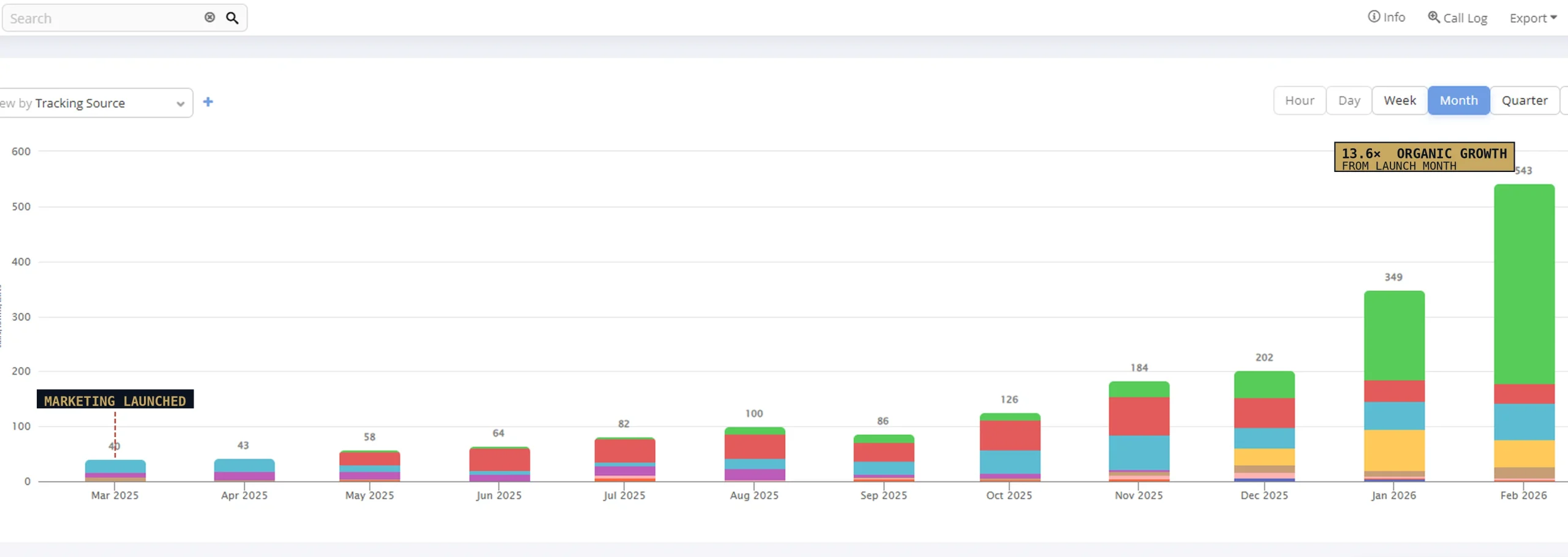
Organic calls per month within a year for one client, 13.6x growth, with every paid-ad call stripped out
Client · Detox and Inpatient Center
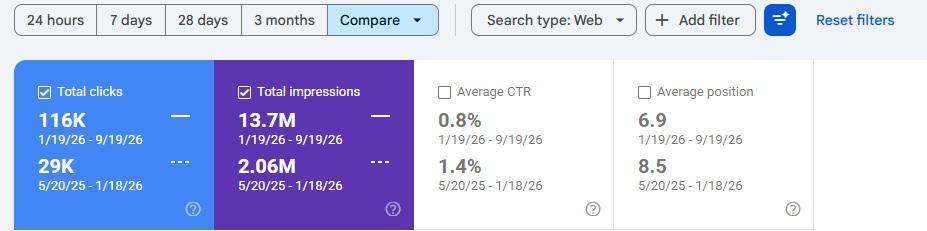
29,000 → 116,000
+300% organic clicks
Organic clicks across equal 244 day periods, with all 68 detox and inpatient beds full and a waitlist by August 2026. Local search carried the urgent detox center queries; organic carried the research.
Live Search Console data · May 20, 2025 to January 18, 2026 against January 19 to September 19, 2026
Client Portfolio · Call Tracking
874.7%
average inbound organic call growth
Average client inbound organic call growth in the first 6 months across our portfolio, tracked call by call in the platform your admissions team answers on.
CallTrackingMetrics data · first six months of partnership, all active clients
The gap
Most treatment centers can tell you their census. Almost none can tell you which of their locations sits in the map pack for the searches that matter, or why the drug rehab next door does.
A Google Business Profile is free for a treatment center. The ranking is earned. We build each profile as a complete profile that both Google and a frightened parent can trust: the accurate primary category, with secondary categories that match the levels of care you are licensed for, specific services that mirror your website content, a description written for people rather than search engines, real photos of the facility and the team, and accurate hours that match how admissions actually answers.
Then we keep it alive. Weekly posts, service updates, answered questions, and a review reply cadence that stays inside HIPAA limits. Google treats an active profile as a current business and a stale one as a question mark, and so does the family comparing you to the two listings beside you.
Our checklist covers the details most treatment centers miss: the suite number formatted the same way everywhere, tracking numbers kept out of the profile so the business information stays consistent, and the profile type chosen correctly for a facility location, a service area program, or a hybrid.
Google ranks the map on three factors: relevance, proximity, and prominence. You cannot move the building, so we build prominence and relevance hard, and we measure all three.
01
Google matches a search to a profile by category, by the services listed, and by the website behind it. When the profile says detox and the site has a detox page with the same language, the match is strong. When they disagree, the ranking leaks to a center whose signals line up.
02
Prominence is how well known your center is online: review count and velocity, consistent citations, domain authority, local backlinks from healthcare providers, community partners, and community organizations, community involvement, and mentions in local press. It is the factor with the most room to grow, and the one most rehabilitation centers have never worked on purpose.
03
Proximity is measured from the searcher, so a single location center wins a radius, not a state. Location pages, correct service area settings, and local content extend that radius as far as it can accurately go, and no further.
04
Google watches what happens after the impression. Profiles that earn calls, direction requests, and website clicks keep rising, which is why conversion work and ranking work are the same work. Missed phone calls cost admissions, so a clear path to contact and an admissions line that answers are part of the local strategy, and we track answered calls alongside rankings.
05
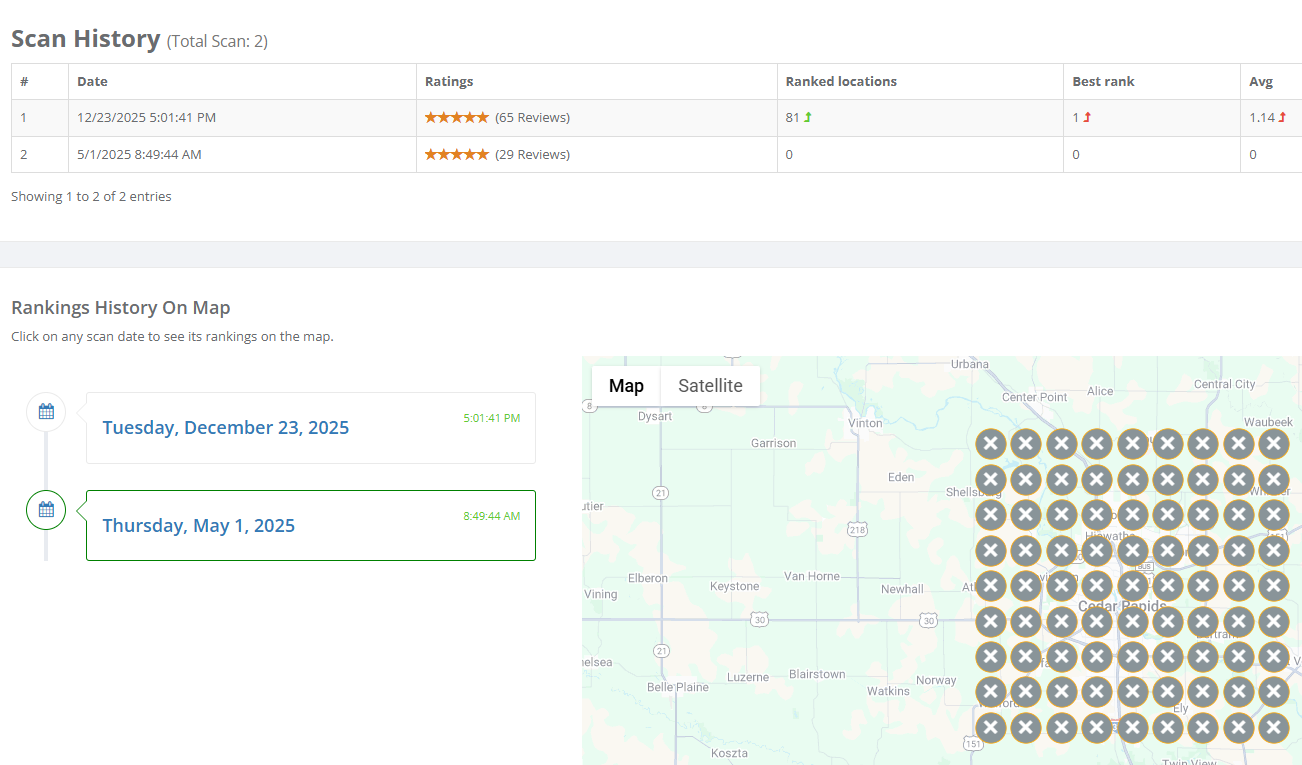
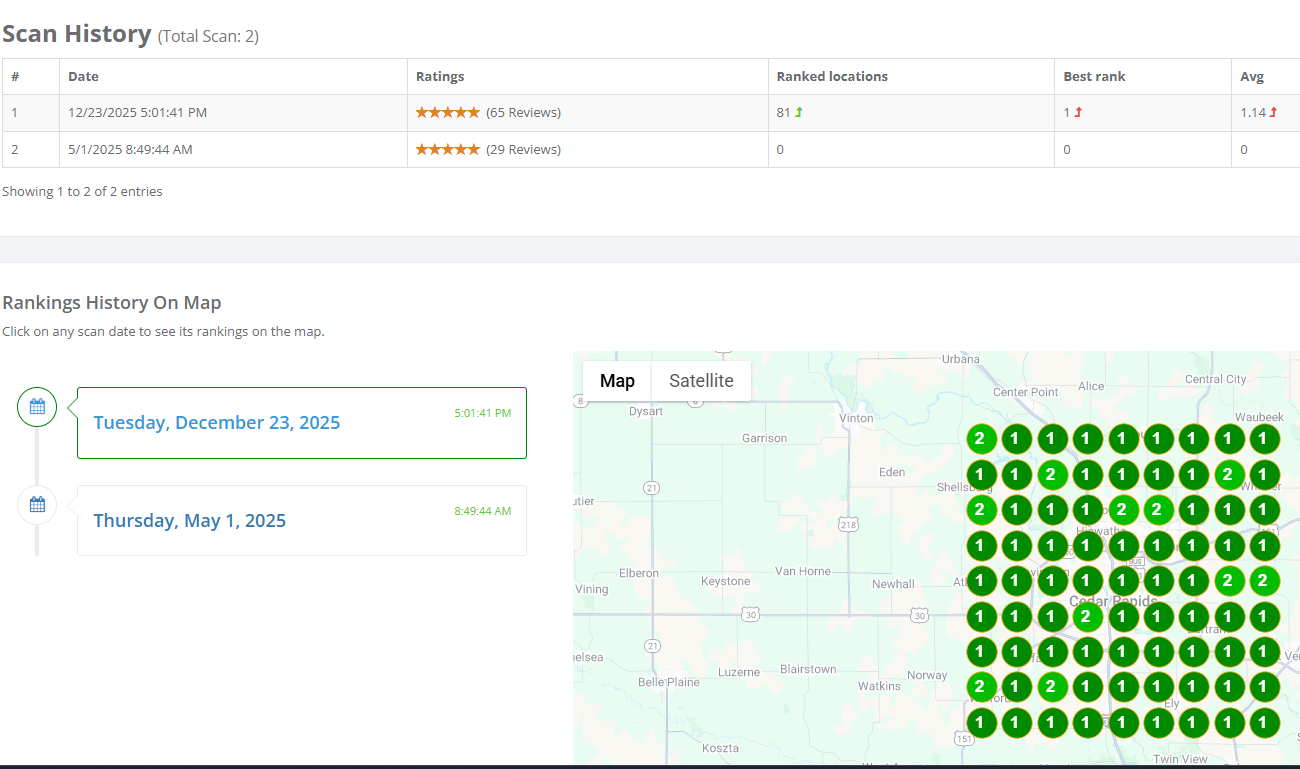
We track map pack position on a grid across your market for every level-of-care search, not one pin at the front door, and walk through it on the monthly report.
A treatment center's Google Business Profile star rating is the single biggest local conversion factor, and the difference between a 4.3 and a 4.8 in admissions inquiries is not small. It is everything. For a private women-only residential facility we took the rating from 4.3 stars to 4.8 stars in 30 days without asking a single client for a new review.
Two plays ran in parallel. First, policy-violation review removals: fake reviews from people who were never clients, reviews from competitors, or content Google prohibits, documented and escalated until they came down. Second, our proprietary Google Reviews campaign, which builds review velocity from the people who choose to share public feedback about the quality care they received. We never offer incentives, never use review gating, and never make a request that puts a client's privacy at risk.
Replies matter as much as ratings. We write reply frameworks that sound like a real person, that thank, reassure, and route without confirming that anyone was ever a client, which is the line HIPAA draws.
Reputation work, in order
Audit every review against Google policy
Document and escalate removals until they land
Launch the review campaign: no incentives, no gating
Reply cadence inside patient privacy limits
Track rating, velocity, and recency every month
Rating and count, kept recent. That is the whole game.
On the call
Your free audit. No sales pitch.
We audit your treatment center's online presence, including where each location sits in the Maps pack today, and walk you through it in a 30-minute call. Then you decide whether to book a second call about working with BHP.
Citations are the mentions of your center's name, address, and phone number across the web: directory listings, healthcare directories, substance abuse treatment locators, maps, and data aggregators. Search engines use them to confirm that your business is real and located where the profile says it is. NAP consistency is the whole discipline. One old address on a legacy listing, one tracking number on a directory, one abbreviation of the suite, and the signal weakens.
We build citations where they count for addiction treatment: the SAMHSA treatment locator, state licensing directories, insurance provider directories, the addiction recovery directories families actually use, and the core data aggregators that feed the rest. We suppress duplicates, correct legacy listings, and keep one master record so a change to hours or phone propagates everywhere. Paid directories that outrank your own site for your own name are fine as citations. They are not a marketing strategy, and a strong local presence is how a single center competes against the national directory sites that otherwise own the organic results for its city.
Citation rules
Name, address, and phone identical everywhere, down to the suite number
Primary business number on every listing, tracking numbers on the website only
Licensing and accreditation shown wherever the directory allows it
Duplicate and legacy listings suppressed or merged
Quarterly audit against the master record
A location page is the website side of a Google Business Profile. Each physical location gets one, and it carries the signals search engines read: the exact address and phone number, an embedded map, hours, the levels of care offered at that address, staff, licensing, photos, directions, and title tags and meta descriptions written for the city and the level of care. The profile links to the page and the page links to the profile, and both agree on every detail.
Where a center serves surrounding cities without a building in them, we build city pages only for markets you genuinely admit from, with hyperlocal content about how someone from that city reaches you, which insurance plans common in that market you accept, and what intake looks like. Thin doorway pages that swap a city name into the same paragraph, keyword stuffing, and slow load times on a page that is not mobile friendly get filtered by Google and ignored by families, and we do not ship them.
Level of care is the second axis. A detox search, an inpatient rehab search, and an outpatient care search are different intents in the same city, so each treatment option gets its own page and its own matching profile services, and that structure is how a level-of-care strategy reaches the map. Dual diagnosis and medication assisted treatment programs get the same treatment, because those are the searches families make by name.
Schema is structured data that tells search engines and AI systems exactly what your center is, where it is, what it treats, and why it can be trusted. For local search it is the technical signal that connects a location page to a profile: the same name, address, geo coordinates, hours, and phone in machine-readable form, plus the medical specialty, the services offered, accepted insurance, and links to the profiles that prove the entity.
We type every treatment center location as a MedicalClinic, MedicalBusiness, and LocalBusiness, list clinical services as medical therapies and procedures, mark the specialty correctly, and validate every block before it ships. As AI search grows, those technical signals are how a center stays visible inside the answers Claude, ChatGPT, Gemini, Perplexity, and Google AI Overviews give a family who asks for a detox nearby. The same schema we ship on client pages runs on this one.
Local schema, block by block
MedicalClinic, MedicalBusiness, and LocalBusiness on every location
Address, geo coordinates, hours, and sameAs profile links
Medical specialty and available services
Accepted insurance and accreditation where the type allows it
FAQPage and BreadcrumbList on the page itself
Faster than organic, and the timeline is the one most agencies will not put on a page. Google Business Profile and reputation work usually moves inside 30 days, because the profile is under your control and Google recrawls it quickly. Map Pack rankings typically begin shifting in 60 to 90 days as reviews, citations, and location pages accumulate. Competitive organic terms usually stabilize on page one in 4 to 6 months, and local rankings keep improving as that foundation strengthens. Local search compounds, which is why our partnerships run on 6 and 12 month terms.
Local work is scoped to your locations, your levels of care, and the competitiveness of each market, and it usually runs inside a broader search partnership rather than as a standalone line. Our local SEO packages range in price depending on market, locations, and overall campaign scope. We quote on the second call, after the audit, once we know how many locations and profiles you are actually competing with. Our promise is 30 days to value: a finished deliverable in your hands inside the first month.
Local search is one engine inside our full search strategy for addiction treatment centers, and every level of care from detox to dual diagnosis programs gets its own page in it. Detox is the most local and urgent of those searches. Recovery residences inside licensed continuums depend on local visibility more than any other level of care. For the step-by-step version of the profile and citation work an in-house coordinator can run, including the common mistakes that sink a listing, the playbook below walks through the settings, the review workflow, and the checklists.
Our guarantee
Our 30-Days-To-Value Guarantee
Within 30 days, we'll have your modern, SEO-ready website built for conversions and ready for approval, your social and Google Business profiles optimized, your first business listings ordered, and your review growth strategy delivered. Clear progress you can see. Confidence you've found your long-term agency partner.
The questions treatment center owners ask on the audit call, answered the way we answer them there.
Local SEO for rehab centers is the work of ranking a treatment center in the Google Maps pack and the local search results for searches with local intent, such as detox near me or inpatient rehab in a specific city. It covers Google Business Profile optimization, Google Maps rankings, reviews and reputation, citations and listings, location pages, and local schema, and it is measured in calls and admissions from local search.
Local SEO decides whether your center appears in the map and the three listings above the traditional results, driven by your Google Business Profile, reviews, citations, and proximity. Organic SEO ranks your website content in the results below the map for both local and broader addiction treatment searches. Drug rehab centers need both, and the strongest local presence sits on a strong organic foundation.
Google Business Profile and reputation improvements usually move inside 30 days. Map Pack rankings typically begin shifting in 60 to 90 days as reviews, citations, and location pages accumulate. Competitive markets with several established centers can take longer, and we show you the grid-based rank tracking so you can watch the movement.
Yes. Each physical location where clients receive care should have its own verified profile with its own address, phone, hours, categories, photos, and reviews, linked to its own location page. Programs without a public address use a service area profile with the address hidden. Sharing one profile across locations leaves every other location invisible in the map.
Yes, if the reply never confirms that the reviewer was a client. Thank the person, restate your commitment to care, and offer a private channel to continue the conversation. Never reference treatment details, dates, or anything that could identify a client, even when the reviewer has shared it themselves. We write reply frameworks that stay inside that line.
They do, as confirmation signals. Consistent name, address, and phone across the SAMHSA locator, state directories, insurance directories, and the major data aggregators tells Google your center is real and located where your profile says. Paid directory listings that outrank your own site for your own name are citations, not a marketing plan.
Build one for every physical location, and city pages only for markets you genuinely admit from, with real content about how people from that city reach you. Thin pages that swap a city name into the same paragraph get filtered by Google and ignored by families, so we do not write them.
Each location page should carry MedicalClinic, MedicalBusiness, and LocalBusiness types with the address, geo coordinates, hours, phone, sameAs profile links, medical specialty, and available services, plus BreadcrumbList and FAQPage markup on the page. Every block is validated before it ships, and the same structure is how search engines and AI search systems read your drug rehab center.
Thirty minutes with Adam, a live look at where each of your locations sits in the Maps pack against your top three local competitors, and a plain read on what would move first. If we are not a fit, you keep the strategy.
Behavioral health only. Verifiable results only.

Written and reviewed by Adam Vibe Gunton, Founder and Managing Partner of Behavioral Health Partners.
Adam Vibe Gunton is an addiction recovery expert, entrepreneur, marketer, brand strategist, and speaker dedicated to advancing the behavioral health industry. As Founder and Managing Partner of Behavioral Health Partners, he has worked across treatment-center development, operations, branding, PR, SEO, advertising, and growth strategy. Combining professional experience with his own lived experience in recovery, Adam brings a unique perspective on how treatment organizations can build trusted brands, reach more people, and create a greater impact.
Last updated July 30, 2026