Behavioral Health Real Estate: A Guide to Buying Property for a Rehab Center
Property is one of the largest costs and hardest-to-reverse decisions in opening a treatment center. We cover what real estate different levels of care actually need, location and zoning, and the buy versus lease question. We cover licensing, compliance and building standards that decide whether a property can ever be approved, the investment outlook, and how to build a real estate strategy before you sign.
Real estate is one of the biggest decisions and biggest costs in opening a treatment center. The right building in the right location can set a program up for long term success, while the wrong one can stall a launch for months or sink it entirely. Behavioral health real estate has its own rules, from zoning to licensing to design, and understanding them early saves money, time, and a great deal of stress.
This guide walks through what this work involves, what rehab facilities actually need from a property, how zoning and buying decisions work, and how to build a smart real estate strategy. It supports the bigger picture in our guide on how to open a rehab center, because the building you choose shapes everything that follows. Whether you plan to buy or lease, this is where a successful treatment center begins.
Why Behavioral Health Real Estate Matters
Demand for substance use and mental health treatment has grown for years, and with it the demand for the buildings that house care. As substance use disorders and mental health needs rise, so does the need for treatment space. The country faces a severe shortage of inpatient psychiatric beds, which keeps demand for well-located facilities high. The behavioral health sector, propelled by the mental health industry trends reshaping care, has drawn serious attention from investors, private equity, and commercial real estate specialists who see both a mission and a market. That interest is a signal: it is now a real asset class, not an afterthought.
For an operator, though, real estate is not an investment thesis. It is the physical home of your program, the place where patients heal and staff work. The building has to fit the specific type of care you deliver, satisfy regulators, and support future growth. Getting it right is a foundational move toward long term success, and getting it wrong is expensive to undo. That is why so many treatment centers treat real estate as a strategic decision, not just a purchase.
What Real Estate Do Rehab Facilities Need?
Different levels of care need very different buildings, so the first question is always what kind of facility you are opening.
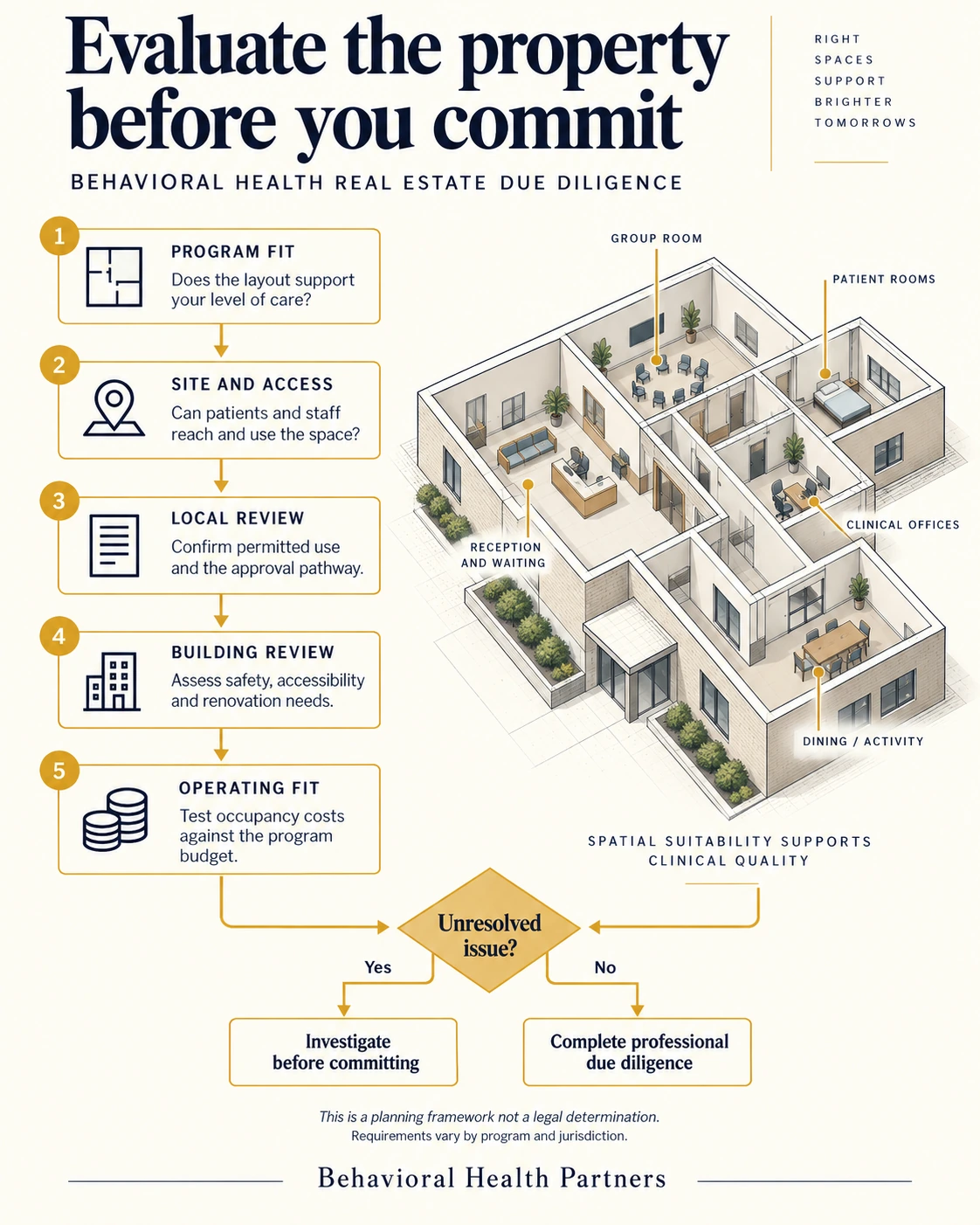
Residential treatment centers and detox programs need a building zoned and built for people to live on site, with bedrooms, common areas, kitchen and dining space, clinical offices, and the safety features residents require. These residential facilities carry the most demanding real estate needs, because they combine housing, medical services, and around-the-clock operation under one roof.
Outpatient programs, PHP, and IOP have lighter but still specific requirements: clinical offices, group rooms, private space for individual therapy, and enough parking and accessibility for clients who come and go each day. A purpose built outpatient facility in the right commercial location can be far simpler to open than a residential center.
Across every model, a treatment facility needs to support both care and compliance. Accessibility, privacy, safety, and a healing environment matter as much as square footage. The best real estate decisions start with a clear picture of the specific requirements of your program and the patients it serves.
Location and Zoning for Rehab Facilities
Location is where many treatment center real estate deals succeed or fail, and zoning is the reason. A building can be perfect in every way and still be unusable if local zoning does not allow a rehab facility there.
Zoning for rehab facilities varies enormously by city and state, and states like California add their own layers of rules for residential programs. California operators especially should confirm local rules early, because California cities scrutinize residential treatment and recovery housing closely. Before you fall in love with any site, research the local zoning, permitted uses, and any conditional use permits a treatment center or drug rehab would need. Talk to the local planning department early, because zoning surprises late in a deal are costly.
There is also important federal law on your side. Under the Fair Housing Act, people recovering from substance use disorders are protected as persons with disabilities, and the Act makes it unlawful for local governments to refuse reasonable accommodations in land use and zoning policies when those accommodations are necessary to give people with disabilities an equal opportunity to use housing. That protection matters most for residential treatment and recovery housing, and it is a powerful tool when a community pushes back on a residential facility. Community opposition, sometimes called NIMBY resistance, is common, and the Fair Housing Act is often the strongest answer to it.
Outpatient facilities are shaped more by the Americans with Disabilities Act. Private health care providers are places of public accommodation under the ADA, so an outpatient treatment center must meet accessibility standards and nondiscrimination requirements. Understanding which laws apply to your specific type of facility keeps a promising deal from turning into a legal problem.
Buying vs Leasing a Treatment Center Property
One of the first real estate questions every operator faces is whether to buy or lease. Both can work, and the right answer depends on your capital, your timeline, and your plans for growth.
Leasing lowers the upfront cost and speeds up your launch, which is why many new treatment centers lease their first location. It preserves cash for clinical operations and licensing, and it gives you flexibility if the program grows faster or slower than planned. The tradeoff is less control and no equity in the property.
Buying costs more upfront but builds an asset, locks in your location, and lets you renovate freely to fit your program. For operators with the capital, purchasing your own real estate can be both an operational advantage and an investment. Financing exists for this: an SBA 504 loan can fund the purchase of land and existing buildings or new construction for an owner-operated facility, up to 5.5 million dollars, though it cannot be used for passive real estate investment. Weigh the money, the financial picture, and your long term plans before you commit either way.
Licensing, Compliance, and Building Standards
A treatment center property is not just real estate; it is a regulated care environment, and the building itself is part of licensing. State licensing bodies often have specific requirements for square footage, room sizes, fire safety, accessibility, and medical readiness, and your property has to meet them before you can operate.
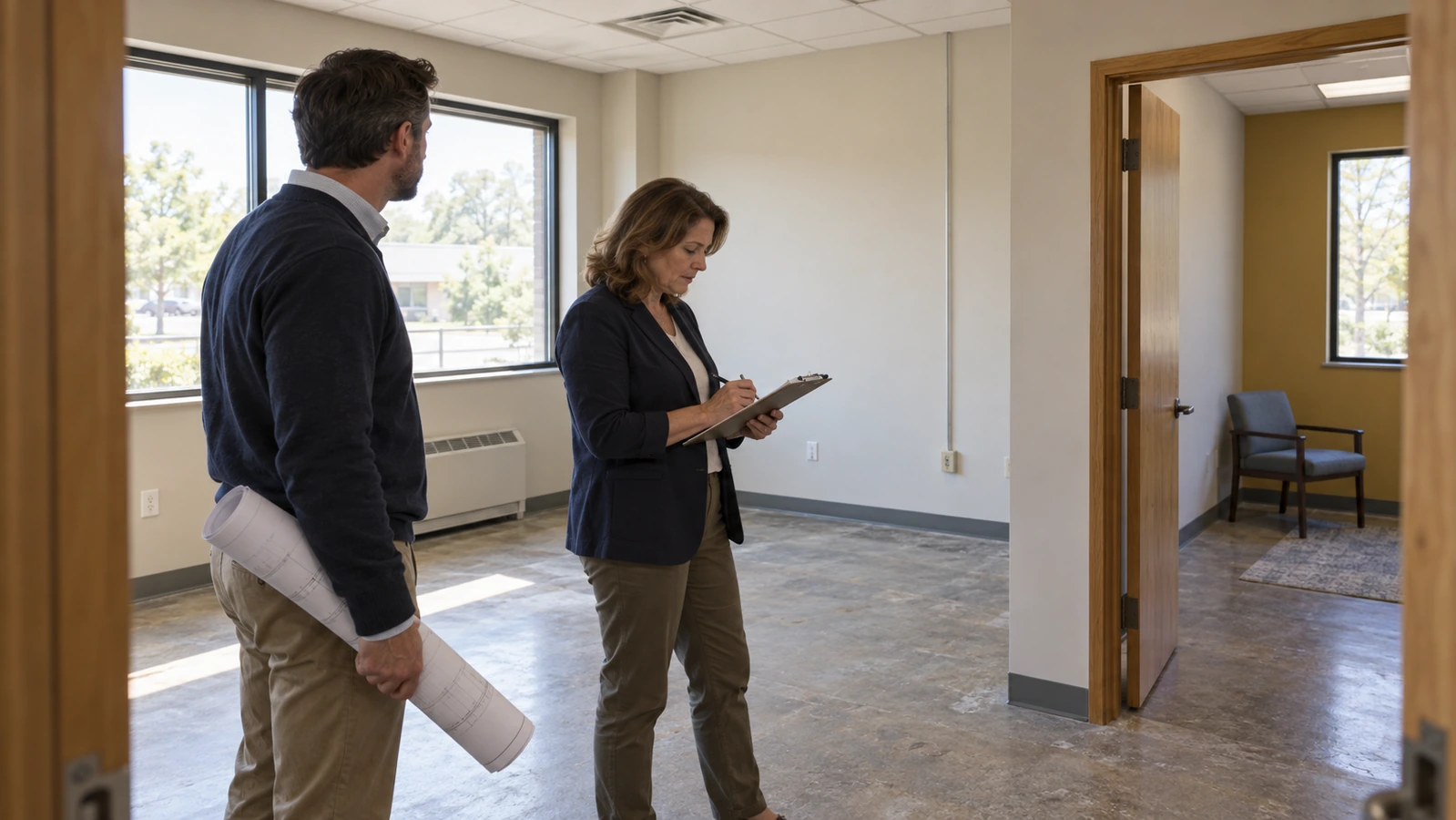
Plan for this early. The compliance and licensing requirements for a residential facility differ from an outpatient clinic, and retrofitting a building to pass inspection is far more expensive than choosing the right building from the start. Legal review, an accessibility assessment, and a conversation with your state licensing authority belong in your due diligence before any deal closes. This is exactly the kind of work our team helps operators navigate when they build a behavioral health program from the ground up.
Behavioral health buildings also carry design requirements most commercial spaces do not. Facilities serving higher-acuity patients often need anti-ligature fixtures and other safety-focused features, must meet life-safety codes, and benefit from flexible layouts that adapt to different treatment modalities. An environmental risk assessment is standard for many behavioral health settings. Designing for a calm, safe, healing environment is not only about compliance; it directly supports patient safety and better outcomes. Factor these specialized construction requirements into your budget early, because they add cost that a generic building never carries.
Investment and Market Outlook
The investment case for behavioral health real estate is strong, which is why investors, private equity, and even healthcare REITs have moved into the space. Steady demand, essential services, and long term leases make treatment center real estate attractive, and the market has rewarded those who understand it.
For an operator, that investor interest cuts two ways. It means capital is available and good properties can appreciate, but it also means competition for the best locations and rising prices in hot markets. A disciplined operator evaluates each deal on its own merits: the cost, the location, the fit for the program, and the realistic demand in that market. The economics of a treatment center should drive the real estate decision, not the other way around. Real estate that a program cannot fill or afford is not a good investment, no matter how attractive the building.
A treatment center property also has to work as a place of care, not just an asset. The building shapes patient outcomes, staff satisfaction, and the daily experience of every person who walks in. A former hospital, medical building, or even a bed and breakfast can sometimes be converted, for example, but security, safety, and a healing environment have to come first. Smart operators discuss their plans with the local planning department early, weigh insurance and payer mix against the local market, and consider the local employment they will create. The buildings that change lives are the ones designed around care, with improvements that serve patients, not just the balance sheet. Operators who invest with that focus tend to succeed.
How to Develop a Winning Real Estate Strategy
A strong real estate strategy comes down to preparation and the right partners.
Start with in-depth market research. Understand the demand for treatment in your target area, the competition, the referral sources, and the payer landscape before you commit to a location. The best real estate decision is the one backed by real data about where care is needed and where a program can succeed.
Then build a dedicated team of the right professionals. Real estate brokers who know behavioral health, healthcare attorneys, architects familiar with treatment facilities, and licensing experts each protect a different part of the deal. An operator committed to doing this right surrounds the purchase with expertise, because this work sits at the intersection of real estate, health care, and law.
Finally, plan for growth. The building that fits your program today should ideally support the future you are building, whether that means adding beds, adding services, or opening a second location. A real estate strategy built for long term success looks past the first lease to the whole arc of the organization. Our feasibility study work and broader behavioral health consulting exist to help operators make exactly these calls with confidence.
Frequently Asked Questions
What is rehab in real estate?
In real estate, "rehab" usually means renovating a property, but in behavioral health, rehab real estate refers to the buildings that house addiction treatment and mental health programs. This guide uses it in the behavioral health sense: the property a treatment center buys or leases to deliver care, from residential facilities to outpatient clinics.
How much money do you need to start a treatment center?
The cost varies widely by level of care, location, and whether you buy or lease. Real estate is one of the largest line items, alongside licensing, staffing, and working capital. A small outpatient program costs far less to open than a residential facility with beds and medical services. A realistic budget starts with a clear real estate plan and an honest look at every cost of getting to your first admission.
Are rehab centers profitable?
Treatment centers can be profitable when they are well run, well located, and matched to real demand, but profitability depends heavily on census, payer mix, and cost control. Real estate plays a direct role: a property that is too big, too expensive, or in the wrong market drags on financial performance, while the right building supports both care and returns. Investors are interested in the sector precisely because strong operators can succeed.
What zoning do you need for a rehab facility?
There is no single answer, because zoning for rehab facilities is set locally and depends on your level of care. Residential programs are treated differently from outpatient clinics, and the Fair Housing Act requires reasonable zoning accommodations for residential recovery settings. Always confirm permitted uses and any conditional use permits with the local planning department before you buy or lease.
Build Your Program on the Right Foundation
Behavioral health real estate is the foundation everything else is built on. Choose a property that fits your level of care, clears local zoning, meets licensing and accessibility standards, and supports the growth you are planning, and you give your program its best chance at long term success. Rush the real estate decision, and you inherit problems that are expensive to fix.
If you want a partner to help you find, evaluate, and open the right property, reach out to work with us and we will help you turn behavioral health real estate into the foundation of a thriving treatment center.
Share this guideLink copied
Adam Vibe GuntonFounder and Managing Partner, Behavioral Health Partners
Adam Vibe Gunton is an addiction recovery expert, entrepreneur, marketer, brand strategist, and speaker dedicated to advancing the behavioral health industry. As Founder and Managing Partner of Behavioral Health Partners, he has worked across treatment-center development, operations, branding, PR, SEO, advertising, and growth strategy. Combining professional experience with his own lived experience in recovery, Adam brings a unique perspective on how treatment organizations can build trusted brands, reach more people, and create a greater impact.
Thirty minutes on video with Adam directly, camera on, screen-sharing your own online presence and your top three local competitors. If we are not the right partner, we will tell you that too.