What it genuinely costs to open a treatment center, line by line. We cover why business planning comes first, then licensing costs, facility acquisition and setup, and ongoing operational expenses. We cover accreditation and certification costs, the admissions and marketing budget you will need from day one, the unexpected costs that catch founders out, and a full breakdown of the total.
Answering the question, “how much does it cost to open a rehab center?” has many topics within the answer that must be addressed to fully comprehend the investment. Opening a rehab center is a significant venture, both financially and in terms of the impact it has on communities. Whether you plan to start a rehab center in a leased building or build a rehab center from the ground up, the budget follows the same categories, and you can watch the full video breakdown for the short version.
If you’re considering entering the behavioral health industry, understanding the startup costs and operational expenses is a crucial step. From the initial planning process to the day-to-day running of the facility, there are multiple layers of expenses to navigate.
This article serves as a comprehensive guide to help you understand how much it costs to open a rehab center. Behavioral Health Partners, a leading name in rehab business development and addiction treatment consulting, has helped countless facilities turn their vision into reality. Here, we’ll break down every aspect of the costs involved, empowering you to make informed decisions.
[EXISTING MID-PAGE CALLOUT BOX STAYS AS-IS: “Thinking about opening a treatment center?” with the Open a Rehab Center button linking to https://behavioralhealth.partners/open-a-rehab/]
The Importance of Business Planning for a Successful Rehab Facility
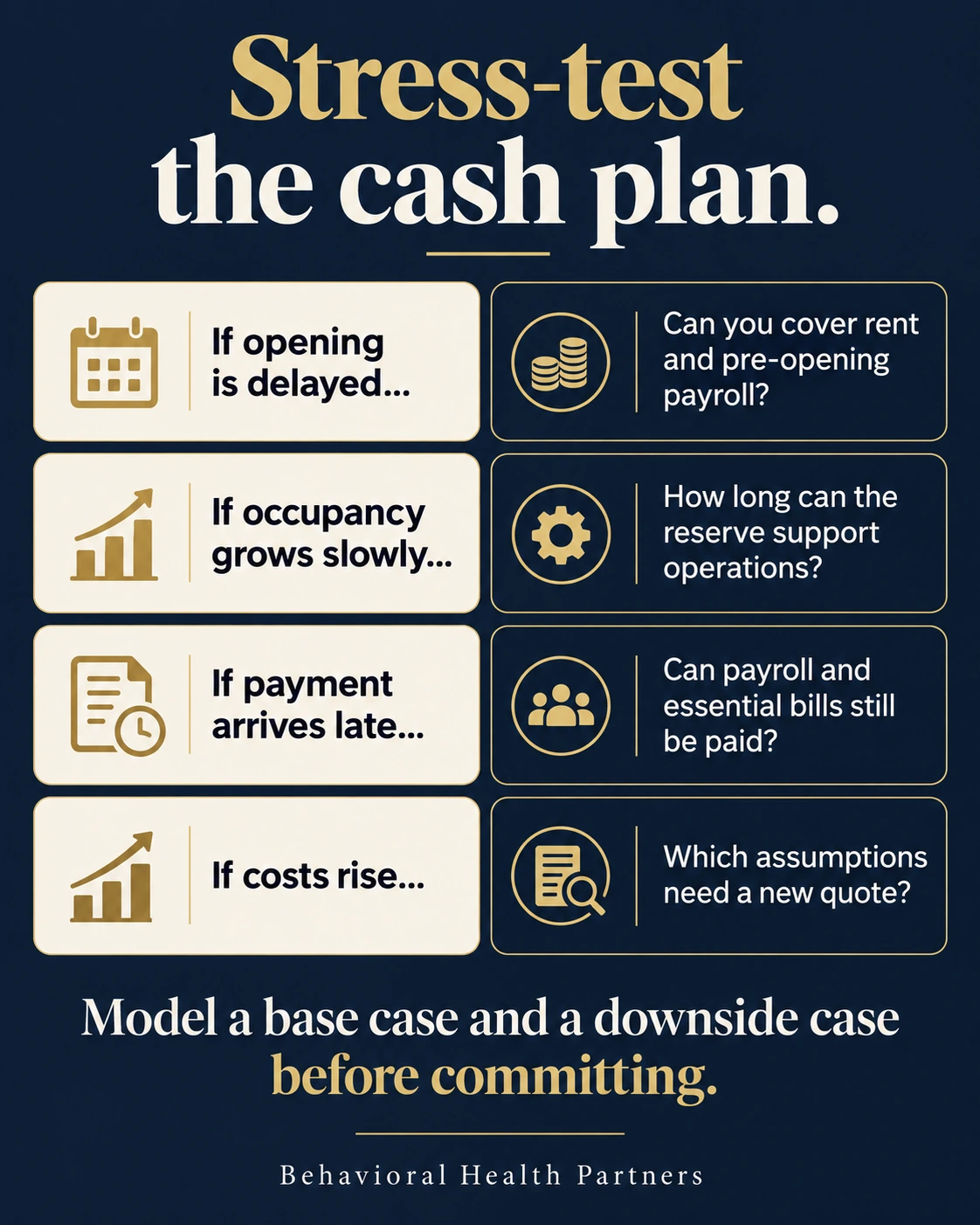
Before embarking on the journey of opening a rehab center, thorough planning is essential to ensure the venture’s viability and sustainability. The foundation of this process involves a feasibility study, a financial proforma, and a comprehensive business plan, and it is where realistic rehab center startup costs get set. Together, these components provide a roadmap for success and help mitigate potential risks.
Feasibility Study
A feasibility study is a crucial step in determining whether your rehab center is viable in your chosen location. This study evaluates factors such as the target market, competition, potential clients, and behavioral health industry trends. It also includes a detailed assessment of zoning requirements and healthcare regulations, which are critical for ensuring your facility is legally open.
Behavioral Health Partners specializes in conducting feasibility studies tailored to the addiction treatment field. Our experts analyze data to provide actionable insights, helping you understand the demand for services in your area and identify opportunities to tailor programs to meet community needs. A well-executed feasibility study not only supports informed decisions but also builds investor confidence by showcasing the business potential.
A drug rehab feasibility study ranges in price from $5,000-$20,000 in the addiction consulting space. Our studies have an investment of $7,500 to $20,000 that have saved clients millions of dollars and hundreds of headaches.
Drug Rehab Proforma
A financial proforma provides a detailed projection of your rehab center’s revenue, expenses, and profitability over a defined period, typically three-five years. A drug rehab proforma is the document lenders and investors ask for first, and it feeds every funding conversation that follows. This document is vital for securing funding, as it demonstrates the financial viability of your business.
The proforma includes:
Startup Costs: Initial investments for the facility, equipment, and licensing.
Operational Expenses: Monthly costs such as salaries, utilities, and marketing budgets.
Revenue Streams: Expected income from services like inpatient care, outpatient programs, and ancillary offerings, mapped against realistic behavioral health billing assumptions.
By working with Behavioral Health Partners, we create a proforma that accurately reflects your goals and positions your rehab center as a sound investment opportunity. Our financial model proformas are a $5,000 investment and have nuanced models that will pay for themselves many times over as you operate your rehab facility.
Business Plan
The business plan ties everything together, serving as your blueprint for success. It outlines your core values, mission statement, target market, and strategies for opening a rehab center. A strong business plan addresses key elements, such as:
Marketing Strategy: How you will attract potential clients through search engine optimization, PPC campaigns, and social media.
Staffing Needs: Roles like medical professionals, support staff, and executive staff, all aligned with your services offered.
Program Development: Detailed descriptions of treatment programs, including inpatient, outpatient, and specialized services, grounded in real behavioral health program development.
Rehab Services: Nuanced approaches to services offered to attract more clients and build a stronger community for continued success.
A well-crafted business plan not only helps secure funding but also provides a step-by-step guide to building and scaling your addiction treatment facility. Our business plans have a $5,000 investment and are a clear GPS system for your drug rehab center to go from startup to community impact and profitability.
With these three foundational elements in place, you’re equipped to move forward confidently, knowing you have a clear vision and the tools to turn it into reality. Behavioral Health Partners offers a feasibility and proforma package for a single location at $15,000 with a turn-around rate of 4-6 weeks, with the business plan $5,000 additional or $7,500 on its own, with consulting calls weekly as we build your vision clarity together.
Costs of Securing Proper Licensing
Securing proper licensing is a critical step in opening a rehab center. Each state has unique requirements for addiction treatment facilities, covering everything from building codes to operational standards. Ensuring compliance with these regulations is essential to legally open and operate your facility. While the process can be complex, understanding the associated costs can help you plan effectively.
Application Fees Across the States
The application fees for licensing vary significantly depending on the state. In most cases, these fees range between $1,000 and $10,000, with some states charging additional fees for inspections, certifications, or renewals. States with more stringent behavioral health regulations may require additional documentation, increasing both the time and financial investment needed.
What Licensing Covers
Licensing ensures that your rehab center meets state and federal standards for safety, care quality, and operational integrity. Common licensing requirements include:
Facility Compliance: Adhering to zoning requirements and building codes.
Program Standards: Ensuring that the services offered align with state guidelines.
Staff Qualifications: Verifying credentials for medical professionals and support staff.
Licensing Consulting Costs
Navigating the licensing process can be overwhelming, particularly for new facility owners unfamiliar with the behavioral health industry. Behavioral Health Partners provides expert licensing consulting services, and hiring an experienced behavioral health consultant helps you meet all state-specific requirements while minimizing delays.
Our licensing consulting costs range from $25,000 to $55,000, depending on the state and the workload involved. This investment includes comprehensive support, such as:
Preparing and submitting the initial treatment provider application.
Coordinating with the state licensing board to resolve any issues.
Ensuring your facility is ready for inspections and approvals.
Why Professional Licensing Support Matters
Errors or delays in the licensing process can lead to costly setbacks. Partnering with experts ensures that every aspect of your application meets the necessary standards. Behavioral Health Partners has extensive experience working with licensing boards across all 50 states, making us the trusted partner for opening and scaling rehab facilities.
By dedicating the necessary resources to secure proper licensing, you can focus on developing your rehab center’s programs, hiring experienced professionals, and providing quality care for your patients.
Facility Acquisition and Setup
Choosing and preparing the right facility is a cornerstone of opening a successful rehab center. The costs associated with acquiring or leasing a facility, coupled with renovations and compliance, can vary widely depending on the location, size, and type of rehab services you plan to offer. Questions of location, zoning laws and facility requirements are answered during the feasibility study process.
Leasing vs. Purchasing
One of the first decisions you’ll make is whether to lease or purchase your rehab facility. Leasing is often a more cost-effective option for startups, with monthly rents ranging from $3,000 to $25,000, depending on the facility’s size and location. Purchasing, on the other hand, involves a larger upfront investment, typically ranging from $500,000 to $2 million or more. This option provides long-term control and potential property appreciation, and buying property for a rehab center comes with its own diligence checklist.
Renovations and Compliance
Whether leasing or purchasing, renovations are likely necessary to meet state building codes, healthcare facility standards, and zoning requirements. Renovation costs can range from $50,000 for minor updates to over $1 million for large-scale projects. Adapting the facility to provide a comfortable, well-equipped environment that aligns with your program development goals is crucial for patient well-being and operational success.
Building a Well-Equipped Rehab Facility
Creating a well-equipped rehab facility is essential to providing quality care and fostering an environment where patients can begin their recovery journey. From medical equipment to comfortable furnishings, every detail plays a role in ensuring your center meets both clinical standards and patient needs.
Essential Medical Equipment
A rehab center must have the necessary medical equipment to deliver effective addiction medicine and treatment programs. Detox beds, patient monitors, and emergency medical supplies are crucial for facilities offering inpatient services. Depending on the level of care provided, initial investments in medical equipment can range from $10,000 to $200,000.
Furnishings and Décor
The atmosphere of your facility significantly impacts patients’ well-being. Residential-style furnishings, calming décor, and communal spaces can make the center feel welcoming rather than clinical. Furnishing and decorating your rehab facility typically costs between $50,000 and $200,000, depending on the size and style.
Technology Infrastructure
Modern rehab centers require robust technology infrastructure, including electronic medical records (EMR) systems, secure databases, and communication tools. Choosing the right behavioral health EMR enhances operational efficiency and ensures compliance with healthcare regulations, with costs ranging from $10,000 to $30,000 annually.
At Behavioral Health Partners, we guide you in tailoring your rehab facility to align with your services and goals, ensuring it is both well-equipped and patient-focused.
Operational Expenses for a Rehab Business
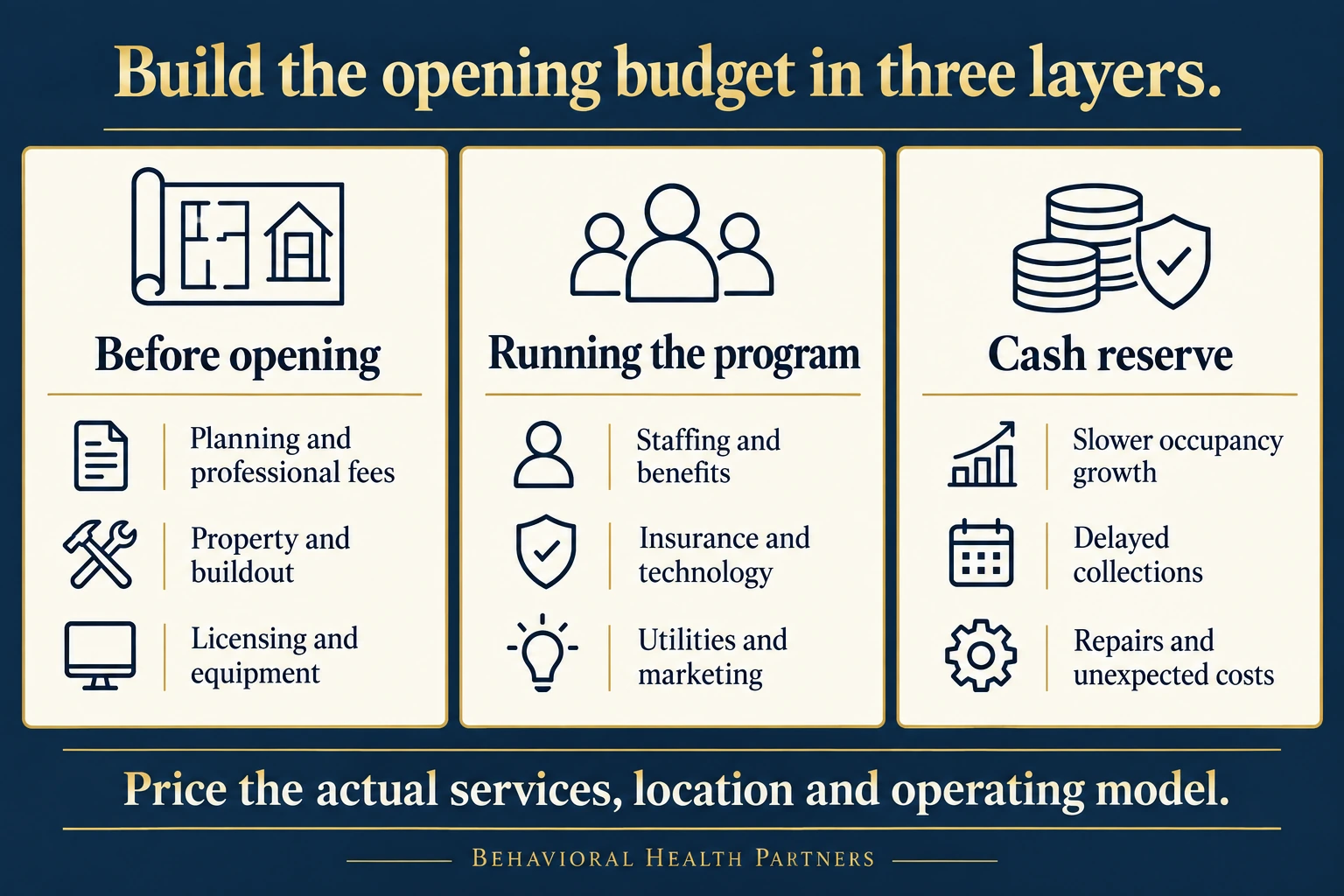
Operational expenses are the ongoing costs required to keep your rehab center running smoothly and providing high-quality care to patients. These expenses encompass staffing, insurance, utilities, and general upkeep, all of which are critical to your center’s success.
Staffing Costs
Staffing is one of the largest operational expenses. A well-run drug rehab facility requires experienced professionals, including medical staff, counselors, and support staff. Salaries can range from $50,000 to $150,000 per year per employee, depending on the role, and Bureau of Labor Statistics data shows counselor wages climbing as demand for the field grows. Key positions such as a medical director or executive staff may command higher salaries, ranging from $100,000 to $200,000 annually.
Insurance and Liability
Comprehensive insurance coverage is essential to protect your business and patients. This includes liability, malpractice, and workers’ compensation insurance, which can cost $50,000 to $100,000 annually, depending on the size of your facility and the services offered.
Utilities and Maintenance
Utilities, cleaning, and regular maintenance contribute to ongoing expenses. Monthly costs for electricity, water, and repairs typically fall between $5,000 and $20,000, depending on the facility’s size and location.
Behavioral Health Partners can help you optimize your operational strategy, ensuring your rehab business maintains financial stability while delivering exceptional care to your patients.
Costs of Accreditation and Certification for a Drug Rehab
Achieving accreditation and certification is essential for establishing your rehab center as a trusted provider of addiction treatment services. Accreditation not only enhances your credibility but also improves patient trust and ensures compliance with industry standards.
The Value of Accreditation for a Treatment Center
Certifications from organizations like TJC (The Joint Commission) or CARF (Commission on Accreditation of Rehabilitation Facilities) demonstrate a commitment to delivering quality care. These credentials are often required for insurance reimbursement and can improve your center’s success rate by ensuring adherence to best practices, and our breakdown of what is the Joint Commission covers how the survey process actually works. Accreditation costs typically range from $15,000 to $50,000, depending on the size and scope of your facility.
LegitScript Certification for Substance Abuse Treatment
For centers planning to advertise online, LegitScript certification is a must. This ensures compliance with search engine advertising policies, allowing you to run Google Ads campaigns. LegitScript certification costs range from $1,000 to $3,000, and our full guide to the LegitScript certification cost and application walks through every requirement.
Behavioral Health Partners provides guidance through the LegitScript accreditation process, ensuring your rehab facility meets the highest standards of care and operational excellence.
Admissions and Marketing Budget for an Addiction Treatment Center
Marketing is the lifeblood of your rehab center’s success. Alongside staffing, it is the most critical part of your budget, ensuring a steady stream of clients seeking your services. Without effective marketing strategies, even the most well-equipped and expertly staffed rehab center will struggle to fill its beds and meet its financial goals.
During the startup phase, initial marketing costs can range from $10,000 to $50,000, depending on the complexity and scope of your campaigns. Once fully operational, marketing typically accounts for 20-30% of your revenue. This ensures that your treatment center remains visible to those in need and maintains a consistent flow of admissions.
Behavioral Health Partners’ Drug Rehab Marketing Expertise
At Behavioral Health Partners, we specialize in crafting marketing strategies tailored to the behavioral health industry. From targeting the right audience to optimizing campaigns for better outcomes, our team ensures your marketing dollars generate measurable results.
Investing in marketing is not just an expense; it’s a commitment to the long-term success of your rehab business and the clients you aim to help. Our monthly digital marketing ranges from $6,500-$50,000+ per month depending on the scope of services and size of the treatment program.
Unexpected and Miscellaneous Costs to Open a Drug Rehab
Opening a rehab center often comes with unforeseen expenses that can disrupt your budget if not planned for. These unexpected costs may arise during the construction, licensing, or operational phases and can significantly impact your financial projections.
Common Hidden Costs for Healthcare Facilities
Construction Delays: Unexpected building issues or zoning law changes can lead to higher renovation costs.
Legal Fees: Additional expenses for resolving compliance issues or addressing legal challenges can add $5,000 to $20,000 annually.
Technology Upgrades: Keeping EMR systems and software up to date can cost $10,000 to $30,000 annually.
Program Adjustments: Tailoring services to meet patient or regulatory demands may require further investment.
Planning for contingencies ensures your rehab business remains financially stable, even when faced with these unpredictable expenses.
Total Cost Breakdown for Opening a Rehab Center
The total cost of opening a drug rehab center varies widely depending on its size, location, and the scope of services offered. While initial investments may seem significant, careful planning ensures your rehab facility is positioned for long-term success, and financing options like SBA 7(a) loans of up to $5 million can bridge the gap between your capital and your buildout.
Small or Outpatient Substance Abuse Treatment Facility
Total Estimated Costs: $300,000, $500,000
Features: Limited capacity, basic inpatient or outpatient services. Founders starting even leaner often begin with how to open a sober living home as a first step into the continuum.
Medium Inpatient Drug Rehab Facility
Total Estimated Costs: $500,000, $1,000,000
Features: A combination of inpatient, outpatient, and specialty treatment programs.
Large Inpatient Drug Rehab Facility
Total Estimated Costs: $1,000,000+
Features: Comprehensive services, luxury amenities, and high staffing levels.
These rehab center startup costs include feasibility studies, licensing, facility acquisition, staffing, and marketing efforts. At Behavioral Health Partners, we help rehab center owners navigate these expenses, providing expertise to ensure every dollar is strategically allocated for maximum impact and long-term growth.
Final Thoughts on The Cost to Open a Rehab Center
Opening a drug rehab is a significant investment, but it is also an opportunity to create meaningful change in the lives of individuals seeking substance abuse treatment. The cost varies based on the size, location, and services provided, but careful planning and strategic business development are essential to success. The upside is real too: our guide to whether rehab centers are profitable shows what the investment can return when the sequence is right. We highly suggest working with experts to ensure every aspect of your behavioral health business is optimized.
Providing quality care requires more than just meeting the financial demands. You must dedicate time to understanding your target audience, addressing both mental health and addiction needs. Tailoring your services to their specific challenges will set your facility apart and ensure long-term success.
Behavioral Health Partners specializes in guiding rehab owners through this process, from planning to operations. Our expertise ensures your facility meets all regulatory standards, serves your community effectively, and maximizes the return on your investment. When you are ready to put real numbers to your vision, Schedule Your Free Discovery Call.
Frequently Asked Questions
How much does it cost to open a rehab center?
Opening a rehab center typically costs $300,000 to $500,000 for a small or outpatient facility, $500,000 to $1,000,000 for a medium inpatient facility, and $1,000,000 or more for a large inpatient facility with comprehensive services. Those totals include the feasibility study, licensing, facility acquisition, staffing, and marketing, and they shift with your location and level of care.
Is it cheaper to lease or build a rehab center?
Leasing is usually the more cost-effective way to start a rehab center, with monthly rents from $3,000 to $25,000. Purchasing or building runs $500,000 to $2 million or more up front but gives long-term control and potential appreciation. Either way, budget for renovations, which range from $50,000 for minor updates to over $1 million for large-scale projects.
What is a drug rehab proforma?
A drug rehab proforma is a detailed financial projection of your center’s revenue, expenses, and profitability, typically covering three to five years. It maps startup costs, operational expenses, and revenue streams, and it is the document lenders and investors ask for first. A nuanced proforma proves financial viability and pays for itself many times over as you operate.
How long does it take to open a rehab center?
The planning package of a feasibility study, proforma, and business plan takes about 4 to 6 weeks. State licensing averages 3 to 4 months in most states, with the fastest licenses secured in as little as 2 months and outliers like New York and New Jersey running 12 to 24 months. Renovations, accreditation, and hiring run in parallel, so sequencing decides your timeline.
_____________________________________________
Adam Vibe GuntonFounder and Managing Partner, Behavioral Health Partners
Adam Vibe Gunton is an addiction recovery expert, entrepreneur, marketer, brand strategist, and speaker dedicated to advancing the behavioral health industry. As Founder and Managing Partner of Behavioral Health Partners, he has worked across treatment-center development, operations, branding, PR, SEO, advertising, and growth strategy. Combining professional experience with his own lived experience in recovery, Adam brings a unique perspective on how treatment organizations can build trusted brands, reach more people, and create a greater impact.
Thirty minutes on video with Adam directly, camera on, screen-sharing your own online presence and your top three local competitors. If we are not the right partner, we will tell you that too.