
your ads live in search results the day campaigns launch

Paid Search for Addiction Treatment · LegitScript-Compliant Campaigns
That buys admissions calls, not clicks.
Behavioral Health Partners runs LegitScript-compliant addiction treatment PPC for rehab centers across the United States and Canada. Google Ads, Microsoft Ads, and paid social, built on high-intent keyword targeting, negative keywords that protect budget, and landing pages designed for the moment of crisis. Every campaign reports cost per admission, not clicks, through call tracking you can audit live. Paid advertising is the fastest single channel in the stack, and this page is exactly how we run it, admission by admission.
Addiction treatment PPC is pay per click advertising built for drug rehab centers: your ads appear at the top of search engine results the moment someone types a query like drug rehab near me, and you pay only when they click. Done right, pay-per-click advertising helps drug rehabilitation centers connect with individuals in crisis at the exact moment they are ready to reach out, because PPC advertising is a targeted method for reaching individuals actively searching for help. Done wrong, it is the fastest way in healthcare to burn a marketing budget on the wrong clicks.
Three minutes on why paid search earns its place in the stack: the benefits for treatment centers, the data-driven approach, and what investing in Google Ads for rehabs actually looks like.
Under one roof
The difference between those two outcomes is everything on this page: certification, keyword targeting, negative keywords, ad copy, landing pages, and the constant monitoring that separates managed campaigns from expensive ones. We run drug rehab PPC in-house, exclusively for addiction treatment centers and behavioral health, under the same roof as the SEO, creative, and call tracking it depends on.
Before strategy, the numbers. Industry analyses and platform data put the stakes plainly.
$185
reported cost per click for keywords like alcohol rehab near me in 2024
61%
of people seeking addiction treatment reportedly go to Google first
$10K/mo
the lowest viable budget industry analyses recommend for rehab Google Ads
20-40%
of wasted ad spend recoverable through negative keywords alone
Read those together: the demand is on search engines, the clicks are among the most expensive in paid advertising, and PPC costs run high because of competition among addiction treatment facilities bidding on the same intent. That is not an argument against paid search. It is the argument for running it properly, because at these prices, every unmanaged campaign subsidizes the managed ones.
It is also why we report what matters. Industry benchmarks report out-of-network facilities paying $7,500 or more per admission from paid channels, while in-network providers can achieve costs per admission of $6,000 or under. Your number depends on your payer mix, your market, and your management, and it is the only number your PPC campaigns should be judged on.
Industry benchmarks are the floor, not the ceiling. Three results from Behavioral Health Partners accounts.
8x
return on ad spend for an inpatient center with over 100 beds
3 → 30
active out-of-network census in 5 months, full-stack engagement
<$2,000
full marketing stack cost per admission for a long-term in-network center
Read those against the benchmarks above: where industry reports put in-network cost per admission at $6,000 or under on paid channels, a properly integrated stack has produced admissions at less than a third of that. We will walk you through the live dashboards behind every one of these numbers on the call.
Search engines reward two things: relevance you earn and relevance you buy. Search engine optimization compounds for years, but it takes months to mature. Pay per click buys immediate visibility while the organic engine builds: your paid ads live in search results the day your campaigns launch, and PPC ads can generate admissions inquiries within 30 days of campaign launch. For new drug rehab centers, that speed is survival. For an established one, it is how rehab centers defend the exact queries where a competitor would otherwise sit above your organic listing.
PPC also does what organic cannot: instant testing. Every headline, offer, and set of landing pages you test with paid traffic teaches you what converts, and those lessons make every other channel better. PPC ads should align with messaging across all marketing channels, campaigns can be enhanced by retargeting previous website visitors, and PPC strategies should be part of a holistic marketing approach for rehab centers rather than a silo. Integrating PPC with the rest of the stack is where the compounding starts, and it is why PPC offers the fastest feedback loop in digital marketing.
your ads live in search results the day campaigns launch

paid can generate admissions inquiries inside a month
teaches the rest of the stack what converts
brings back the visitors who did not call
You cannot skip this section. Google Ads requires LegitScript certification for addiction treatment ads, and Google has mandated LegitScript certification for addiction services since May 2018. Certification ensures only reputable providers can advertise addiction services: LegitScript requires background checks on executive teams of treatment centers, reviews your licensing and clinical practices, and audits your website's claims. The certification process can take from two weeks to nine months, which means it belongs on your calendar before your media plan.
Microsoft Ads and Meta enforce parallel rules, and addiction treatment advertising requires compliance with strict platform rules everywhere it runs. Transparency in advertising practices is crucial in the addiction treatment industry, and the platforms now enforce what ethics always demanded. Our consulting team prepares LegitScript applications, website compliance reviews, and documentation so certification clears without resubmission cycles, and our paid media practice is built on that certification.
Google's mandate for addiction services
on the executive team
clinical practices and website claims
how long the process can take
Six disciplines, run together, on every account and every one of our PPC campaigns. This is what management actually means, and it is why effective keyword management is essential for PPC success in addiction treatment.
Keyword Targeting Built on Search Intent: High-intent keywords are critical for targeting individuals seeking urgent help, so we build around the queries that admit: detox tonight, insurance-specific searches, and long tail keywords by level of care. Long-tail keywords often generate higher conversion rates for rehab ads and can reduce costs at the same time, targeting local keywords is essential for rehab centers because rehab services are bought locally and admissions are geographic, and geographic targeting helps increase relevance and reduce wasted ad spend. Relevant keywords first, volume second, always: targeting keywords the moment demands beats chasing traffic.
Negative Keywords That Protect the Budget: Negative keywords can decrease wasted ad spend by 20 to 40% by blocking irrelevant searches before they cost you: job seekers looking for rehab careers, students researching, free-treatment queries your model cannot serve. We maintain negative lists from day one and expand them weekly, because every blocked click is budget returned to the searches that admit.
Bidding Strategies and Quality Score: Monitoring and adjusting bids is a vital part of PPC management, and bidding strategies shift as your data matures: manual control early, smart bidding once conversion volume supports it. Quality score is the quiet lever: a quality score of 7+ can lower cost per click by 30%, and quality score is earned through ad relevance, expected click-through, and landing page experience working together.
Ad Copy and Ad Creation: Ad copy should be compassionate and transparent to build trust, because the person reading it is in the worst week of their life. Our ad creation pairs accurate headlines with proof, uses call extensions since they enhance accessibility for mobile users in crisis, and never over-promises outcomes. Compassion converts better than pressure, and it is also the only ethical way to run ads in this industry.
Landing Page Optimization: Dedicated landing pages can improve conversion rates for PPC campaigns dramatically, so paid traffic never lands on your homepage. We build optimized landing pages per campaign: one message, one action, fast load, verification-ready claims. Landing page optimization is where qualified traffic becomes admissions, and great landing pages are usually the highest-ROI work on the account.
Call Tracking and Constant Monitoring: Continuous optimization is necessary for maintaining effective PPC campaigns, and successful PPC requires integration with call tracking for performance insights: which keyword, which ad, which landing page produced each call and each admission. Google Analytics ties the web side together, call tracking ties the phone side, and constant monitoring turns both into the decisions that optimize campaigns weekly, not quarterly.
Three platforms, each with its own rules, strengths, and place in the plan for addiction treatment centers.
The core of rehab paid search: PPC ads for rehab centers appear in search results for relevant queries at the exact moment of need, on the platform where most of the demand lives. Search ads, call-only campaigns, and Performance Max where the data supports it, all under LegitScript certification. If you are asking whether running Google Ads for a treatment center is even allowed: yes, with certification, and legally.
The overlooked 10 to 15%: Bing's audience skews older and often insured, cost per click typically runs lower, and your Google campaigns import directly. For most rehab centers, Microsoft Ads is the cheapest incremental reach available once Google is dialed in.
Social media ads on Meta and other social media platforms work the awareness and retargeting layers: families researching options for addiction and mental health care, alumni communities, and the people who visited your site but did not call. Social media is not where crisis searches happen, and that is exactly why it is cheaper, and why it belongs in the plan as the layer that keeps you familiar before the search happens.
Two budgets matter in pay per click: media and management. On media, a minimum budget of $10,000 per month is recommended for PPC campaigns in this industry for outpatient treatment centers only. And some industry analyses put optimal initial spend for campaign data collection as high as $50,000 for inpatient to start. Below the floor, the auction prices simply outrun your ability to learn. Your marketing spend should be sized to your bed count and payer mix, not to a template. On management, we quote flat scopes after the audit, never a percentage of ad spend, because percentage pricing rewards agencies for spending more, and that incentive should make you nervous.
What you should demand for the money: cost per admission reporting, not click reports. At $185 clicks, the click price matters, but cost per admission is the business. Every account we manage reports both, live: our strongest long-term in-network engagement runs a full marketing stack cost per admission under $2,000, and we walk rehab centers through the math on a screen-share whether or not they hire us.
Six minutes from Adam on what drives rehab click prices, the three multipliers that govern your admission economics, the four account checks that spot waste, and why cost per admission matters more than cost per click.
PPC integrates with SEO for immediate visibility and long-term growth, and the accounts that win run both deliberately: paid search defends the high-intent queries on search engines today, organic search compounds underneath it, and the keyword data flows both directions. Your PPC search terms tell the SEO team which queries convert; your search engine results pages rankings tell the paid team where to reduce bids as organic coverage matures. That handoff, run monthly, is how marketing campaigns get cheaper every quarter instead of more expensive. Our complete drug rehab SEO practice lives in its own silo, and it is the other half of this page:
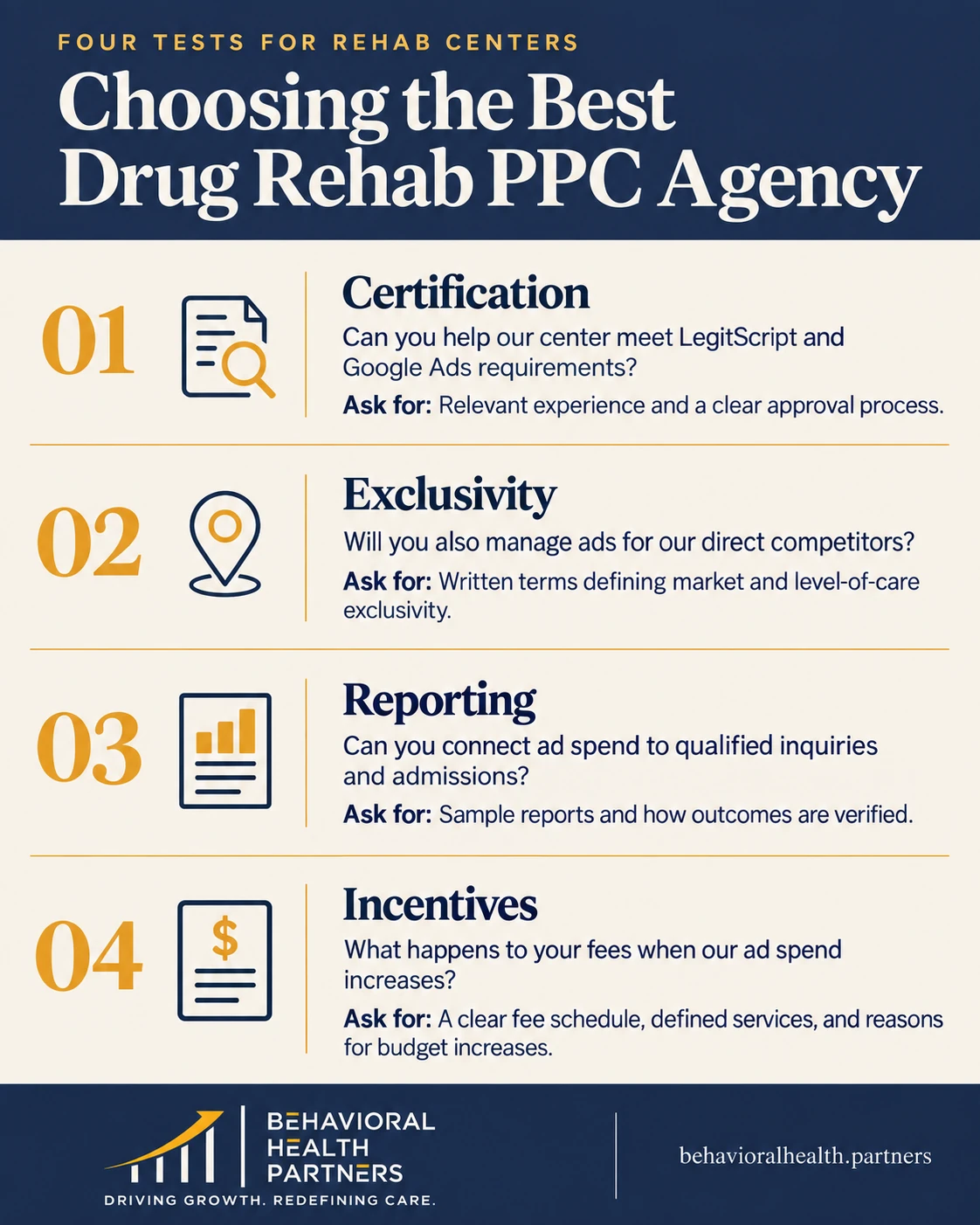
Run four tests on any healthcare marketing agency pitching you paid search. First, certification: have they carried treatment centers through LegitScript certification before, and do they build every campaign to LegitScript's standards? Second, exclusivity: an agency running PPC campaigns for two drug rehab centers in one market is bidding against itself with your money. We take one center per market, per level of care, and we confirm the market is open before we partner. Third, reporting: if they show clicks and impressions instead of cost per admission, they are reporting activity, not results. Fourth, incentives: flat management scopes, not percentage of spend.
And ask who answers the phone their ads make ring. Paid traffic converts in the first minutes; most rehab centers lose admissions between the click and the callback. Our accounts pair PPC with admissions optimization and call tracking, because a successful PPC engagement is measured in a fuller census, and quality treatment centers deserve marketing that can prove it filled more beds with more patients who actually needed them.
On ethics
One line on ethics, because this industry earned the scrutiny: we run ads for licensed, accredited providers only, we write ad copy for people seeking addiction treatment with the compassion that moment deserves, and we refuse accounts built on deception, brokered calls, or pressure. The addiction treatment space is rebuilding trust with the public, and behavioral health marketing that tells the truth is how alcohol addiction treatment, drug treatment, and mental health care all get found on search engines by the people who need them. Whether someone needs alcohol rehab, a drug treatment center, or broader addiction treatment services, the ad that finds them should be as truthful as the care behind it.
On the call
Your free audit. No sales pitch.
We'll audit your treatment center's online presence and walk you through it in a 30-minute call. Then you decide whether to book a second call about working with BHP.
Yes, legally and effectively, with LegitScript certification. Google has required it for addiction services since May 2018, and running Google Ads without it is not an option: uncertified accounts are simply not served. The certification reviews your licensing, executive team, and website claims, and once cleared, your ads compete like any other advertiser's.
Plan on a pay per click media floor around $10,000 per month per industry recommendations, scaled to your drug treatment center's bed count and market, plus flat management fees quoted after the audit. Judge the whole thing on cost per admission: industry benchmarks report $7,500 or more per admission for out-of-network facilities and $6,000 or under for in-network providers, and your management should be fighting to beat your benchmark every month.
PPC ads can generate admissions inquiries within 30 days of campaign launch, and the first calls often arrive the first week. The first 60 to 90 days are also a learning period: the account gets meaningfully cheaper as conversion rates stabilize, data accumulates, and bidding strategies mature, so judge the trend, not the first invoice.
LegitScript is the third-party certification Google and other platforms require before addiction treatment ads can run. It verifies licensing, runs background checks on executive teams, and audits your website's claims. The process can take from two weeks to nine months depending on your documentation, so start it before you plan media. Our consulting team manages the application end to end.
Yes. Microsoft Ads typically adds 10 to 15% incremental reach at lower cost per click with an older, often insured audience, and social media ads handle retargeting and family-awareness layers. Google carries the crisis-moment demand; the other platforms make the whole plan cheaper and stickier.
Both, sequenced. Paid search buys immediate visibility on search engines while search engine optimization matures, and the two share data: paid tells organic what converts, organic tells paid where to pull back. Rehab centers that run only PPC rent their demand forever; rehab centers that run only SEO wait months they may not have. The stack is the strategy.
Negative keywords do the heaviest lifting, blocking 20 to 40% of wasted spend from irrelevant searches, job seekers, and research queries. After that: tight geographic targeting, search-term audits every week, quality score work to lower cost per click, and optimized landing pages matched to each campaign so the clicks you do pay for actually convert.
Always. The Google Ads account, the conversion data, the call tracking history, and the landing pages built for your campaigns are yours, in your name, with our team as managers. Any agency that holds your account hostage is telling you what the relationship really is.
Three things: certification gates before you can run ads at all, some of the most expensive clicks in paid advertising with reported costs up to $185 per click for keywords like alcohol rehab near me, and a reader in crisis on the other side of every impression. It is the least forgiving PPC environment in healthcare marketing, addiction treatment centers deserve specialists in it, and that is exactly why generalist management fails.
Verifiable Results Only
Thirty minutes with Adam, a live screen-share of your paid search presence against your top three competitors, and a read on whether PPC is your next dollar or your third. If your market is closed at your level of care, we tell you on the call.
One treatment center per market, per level of care.

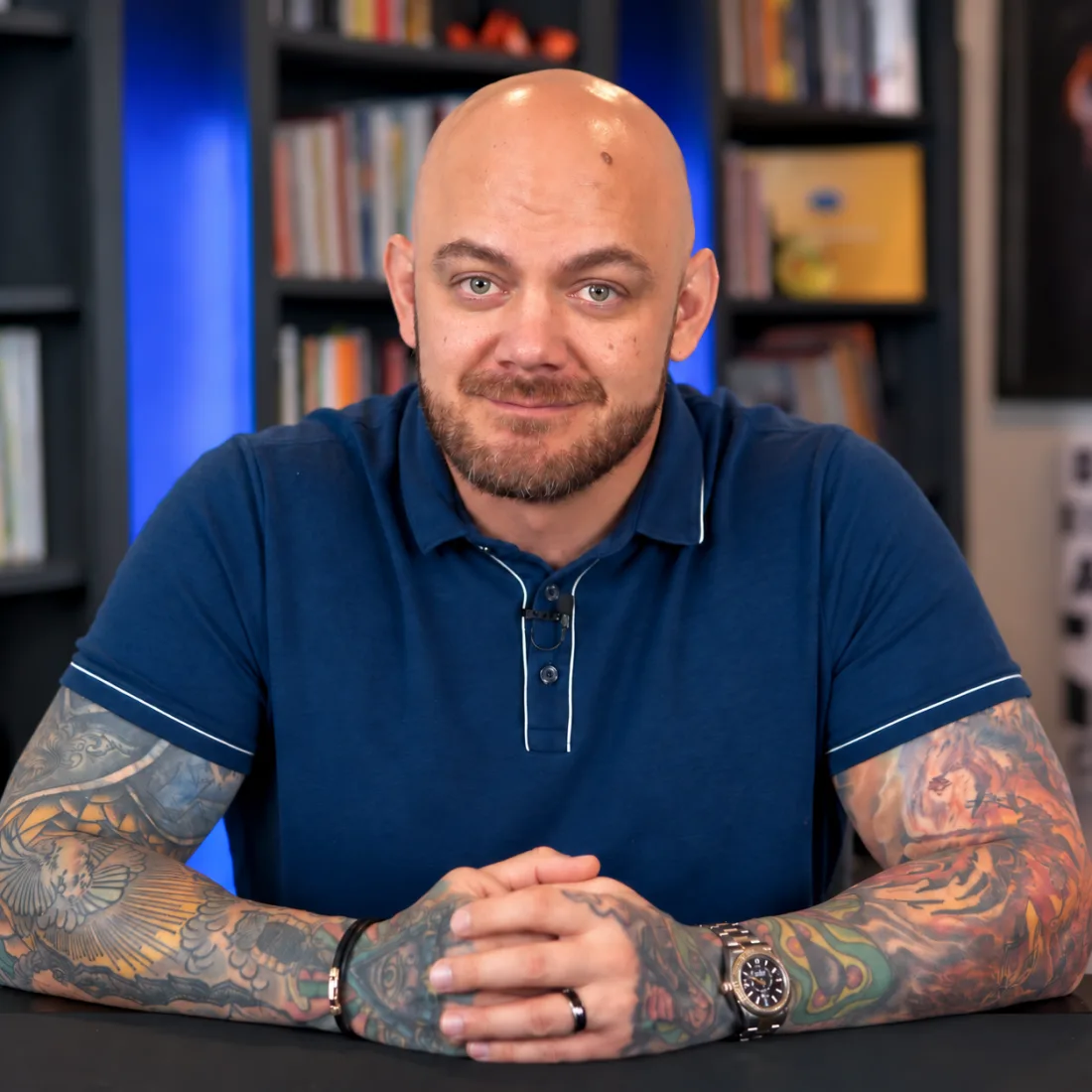
Written and reviewed by Adam Vibe Gunton, Founder and Managing Partner of Behavioral Health Partners.
Adam Vibe Gunton is an addiction recovery expert, entrepreneur, marketer, brand strategist, and speaker dedicated to advancing the behavioral health industry. As Founder and Managing Partner of Behavioral Health Partners, he has worked across treatment-center development, operations, branding, PR, SEO, advertising, and growth strategy. Combining professional experience with his own lived experience in recovery, Adam brings a unique perspective on how treatment organizations can build trusted brands, reach more people, and create a greater impact.
Last updated July 30, 2026