An honest answer to the question the industry usually dodges. We cover what treatment centers earn by level of care, whether they are genuinely profitable, and what owners take home. We cover the revenue streams behind the numbers, what it costs to enter the industry, the expenses that decide your margin, the for-profit and nonprofit comparison, and how private equity changes the maths.
Ask ten people in the addiction treatment industry how much money do rehab centers make and you will get ten dodges. Here is the honest answer: a single drug rehab center can generate anywhere from $1.5 million to well over $10 million in annual revenue, and the difference comes down to level of care, payer mix, and census. We build, launch, and scale addiction treatment centers for a living, so this guide gives you the real numbers: revenue by facility type, rehab center profit margin benchmarks, what rehab owners take home, and the expenses that quietly decide everything. If you are researching how to open a rehab center, start with the economics. They shape every decision that follows.
How Much Money Addiction Treatment Centers Make by Level of Care
Revenue varies based on a facility’s size and geographic market, but the biggest driver is which treatment programs you run. Across the market, rehab centers charge between $15,000 and $75,000 per client monthly, and the spread between a small outpatient clinic and a luxury campus is enormous. Here is the profit potential across the addiction treatment field.
Level of care
Typical charge per client
Revenue expectation
Outpatient / IOP
Billed per session or per episode
$1.5M to $3M annually for smaller standalone sites
Standard residential
$5,000 to $20,000 per month
Scales with bed count and census
Mid-to-high residential
$15,000 to $75,000 per month
Multi-million annually at healthy occupancy
Luxury residential
$30,000 to over $100,000 per month
Highest revenue per bed, private pay driven
Outpatient Programs and IOP
Outpatient programs are the most accessible entry point into the rehab business. Annual revenues for smaller standalone outpatient sites often range from $1.5 million to $3 million, and Intensive Outpatient Programs typically require $300,000 to $600,000 in startup capital, a fraction of what residential demands. Because clients keep living at home, your real estate footprint stays small and your addiction treatment services scale on staffing rather than beds.
Residential Treatment and Inpatient Care
This is where the substance abuse treatment industry generates its largest revenue per client. Mid-sized residential facilities often charge $5,000 to $20,000 per month for standard care, and inpatient rehab programs with detox and richer clinical services command far more. Inpatient services carry heavy fixed costs, so the same beds that create revenue can sink you when they sit empty. For what families and insurers actually pay by state and setting, see our full breakdown of the cost of addiction treatment.
Luxury Residential Treatment
Luxury residential centers can charge from $30,000 to over $100,000 per month per client. These centers operate at the intersection of healthcare delivery and hospitality: chefs, private rooms, low staff ratios, and premium services that justify the rate to private pay clients. The margins are strong. So is the pressure to be worth the invoice.
Are Rehab Centers Profitable?
Yes. The substance abuse recovery industry is worth around $42 billion globally by current market estimates, and SAMHSA’s national services survey counts more than 14,000 substance abuse treatment programs operating in the United States. That many drug rehab centers do not stay open on mission alone. So are rehab centers profitable? The ones that respect the math are.
Drug Rehab Center Profit Margin Benchmarks
Average operating margins for residential programs range from 15% to 25%. Private-pay models offer the highest margins in rehabilitation centers, while heavily government-funded programs run thinner. The payer mix can significantly impact a rehabilitation center’s profitability: a healthy mix of high-paying private insurance and cash-pay clients stabilizes revenue, and leaning entirely on one payer type leaves you exposed to a single rate change.
The Occupancy Math That Decides Your Profit Potential
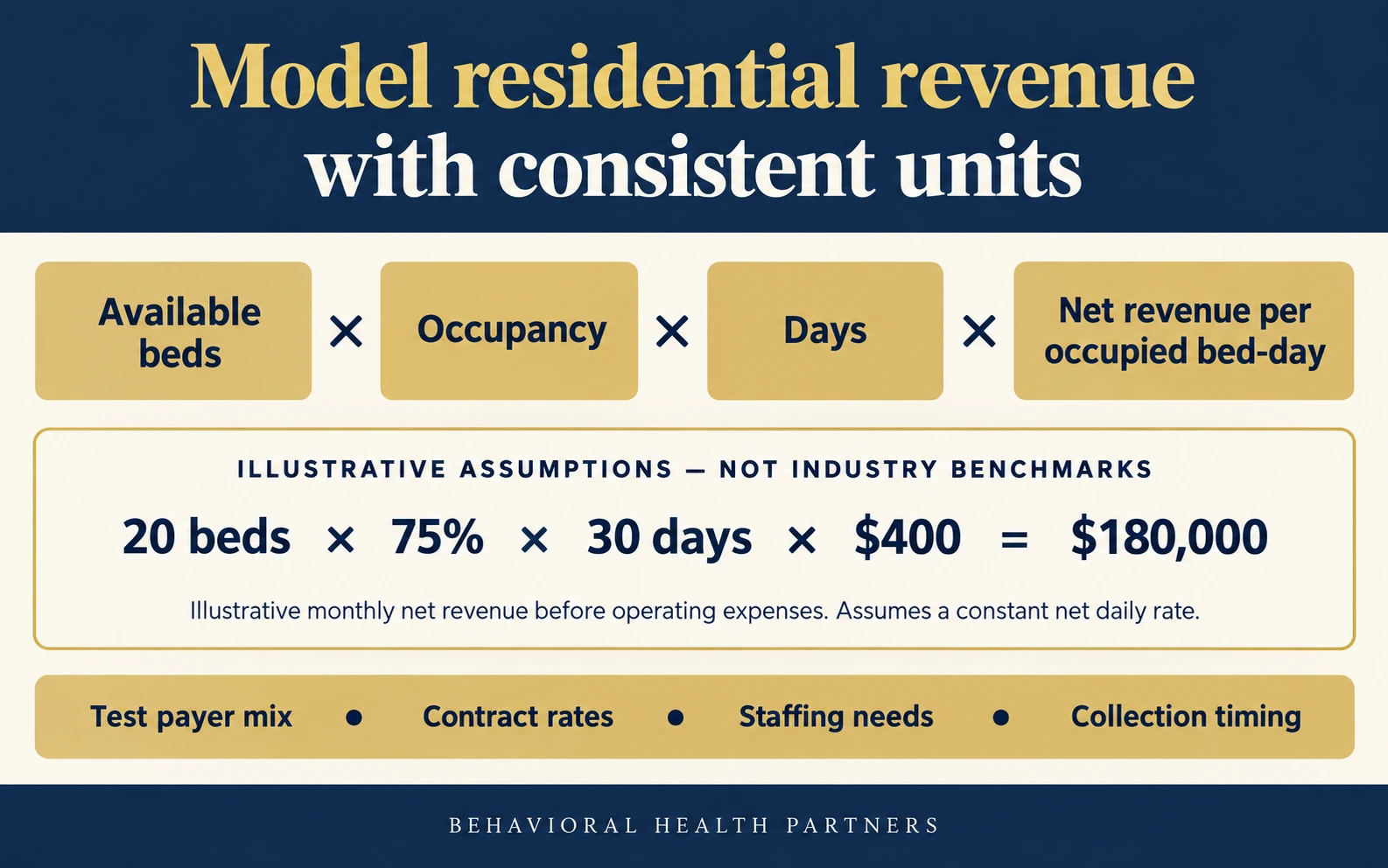
Census refers to the number of occupied beds or active slots in rehab programs, and revenue is census times rate times average length of stay. Occupancy rates below 65% to 75% can push a drug rehab center into financial trouble, because rent, insurance, and staffing cost the same whether beds are full or empty. Profitability improves by increasing occupancy without proportionally increasing costs, which is why facility capacity and patient referrals are critical. If census is your problem, start with how to fill beds in a treatment center.
How Much Do Rehab Owners Make?
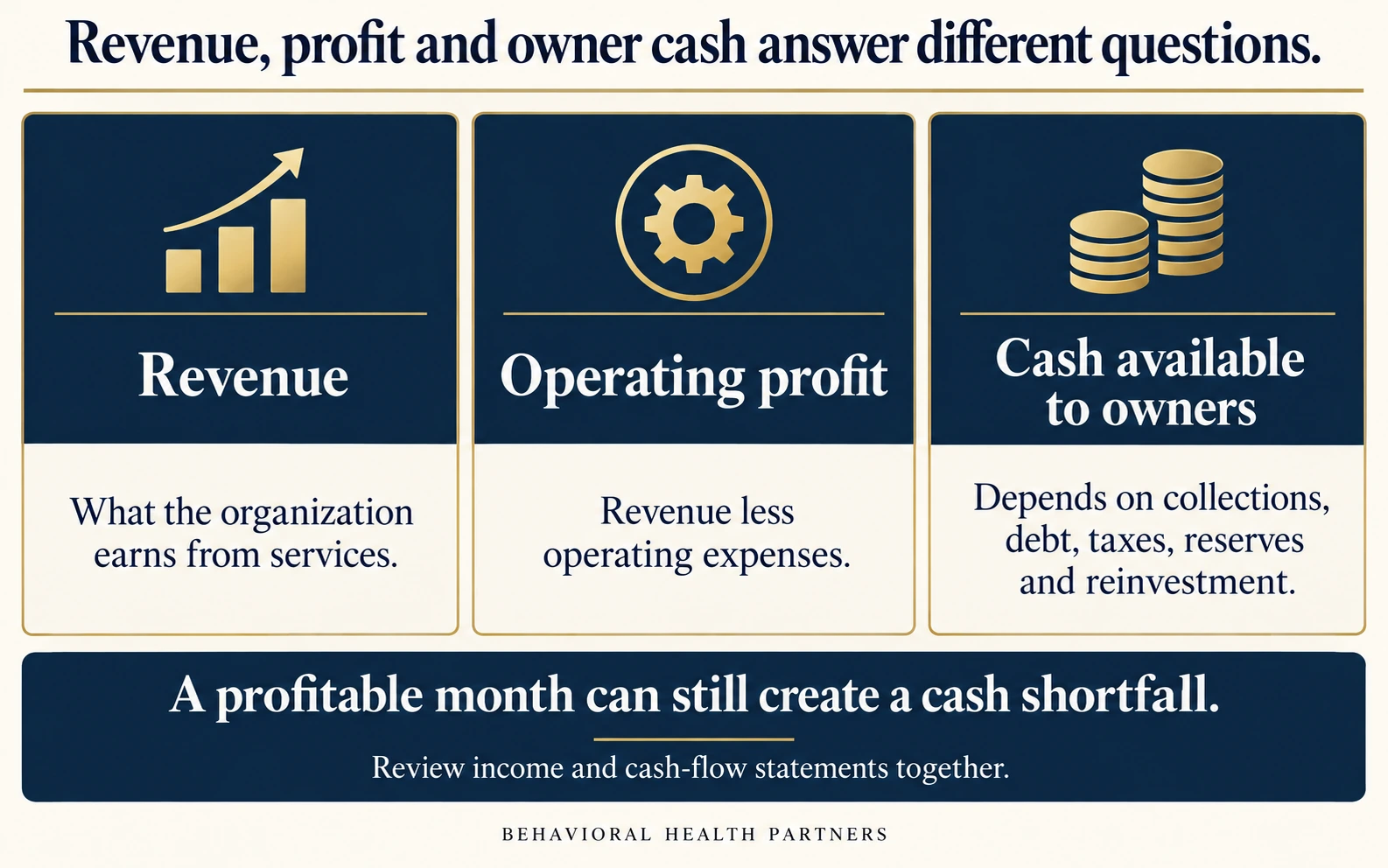
Rehab centers can potentially earn six figures annually for their owners, and multi-site operators earn well beyond that. The math is simple: a residential drug rehab center producing $5 million in revenue at a 20% operating margin generates a million dollars in operating profit, and the owner draw comes out of that after debt service. Facility owners running lean outpatient models take home less per site but scale faster. The part most of this industry will not say out loud: undercapitalized rehab owners frequently pay themselves nothing in year one while census builds. Plan for the ramp, not the fantasy.
Behavioral Health Revenue Streams: Where the Money Comes From
Rehabilitation centers earn revenue from a mix of insurance reimbursements, government programs, private-pay patients, and ancillary services. The strongest drug rehab business models build diversified revenue streams around their core addiction treatment services, because every payer type eventually fails you if it is your only one.
Insurance Reimbursement
Private health insurance constitutes a major source of revenue for rehabilitation facilities, and insurance reimbursement is where most treatment centers win or lose their margin. Rates vary by network status, state, and level of care. Everything downstream starts with verifying insurance coverage at admission, because weak insurance coverage checks become denied claims. Get your behavioral health billing infrastructure right before you open, and understand value based contracting before you sign payer agreements.
Private Pay Clients
Private pay carries the best economics in the drug rehab business. No prior authorizations, no clawbacks, no waiting 90 days to get paid. Centers that attract private pay clients through reputation, amenities, and specialized services stabilize cash flow in a way insurance-only programs never do. It requires a brand families trust, because families paying cash do more homework than anyone.
Government Contracts and Grants
Government funding provides stable, recurring volume but often at lower reimbursement rates. Government contracts, county referrals, and grant-funded MAT programs for opioid use disorder keep substance abuse treatment programs full through slow seasons, and medication assisted treatment funding keeps expanding. Treat these revenue streams as your floor, not your ceiling.
What It Costs to Get Into the Addiction Treatment Industry
You cannot talk about profit without talking about the buy-in. Total startup spending can exceed $500,000, and renovation costs for a rehab facility can exceed $1 million on their own. Here is what a new treatment center actually spends before its first admission.
Startup line item
Typical range
Feasibility study and market research
$5,000 to $20,000
Licensing fees
$1,000 to $10,000
Accreditation
$15,000 to $50,000
Monthly rent for a rehab facility
$3,000 to $25,000
Renovations
Can exceed $1,000,000
Initial marketing
$10,000 to $50,000
IOP total startup capital
$300,000 to $600,000
Market Research and Initial Costs
A feasibility study costs between $5,000 and $20,000 and is the cheapest insurance you will ever buy: it tells you whether your market conditions support another program before you sign a lease. Accreditation costs typically range from $15,000 to $50,000, and meeting Joint Commission standards is what unlocks the best insurance contracts. Property is its own discipline, where zoning laws can kill a deal late; start with zoning for rehab facilities. On funding: startup capital often comes from self-funding or family, SBA loans can provide up to $5 million for rehab startups, USDA loans offer low-interest financing for rural treatment centers, and HRSA grants support addiction treatment startups. For the full picture, work through our guide to rehab center startup costs, watch the cost to open a rehab center video, and pressure-test your numbers against a real financial proforma.
The Expenses That Decide Your Margin
Labor Costs, Quality Care, and Long Term Outcomes
Labor can account for up to 70% of expenses in rehabilitation facilities. Staff salaries can range from $50,000 to $200,000 annually depending on role, and the pressure is not easing: the Bureau of Labor Statistics reports a median wage of $59,190 for substance use and mental health counselors with employment projected to grow 17% over the next decade. Great clinical teams cost real money. Pay for quality care anyway: patient outcomes and long term outcomes fill your beds through word of mouth and alumni referrals.
Fix Billing Leakage to Maximize Revenue
Billing and collection leakage can cost facilities 10% to 15% of expected revenue. On a $4 million book, that is $400,000 to $600,000 you earned and never collected. Operational efficiency in revenue cycle, utilization review, and documentation is the fastest way to maximize revenue without adding a single bed.
For-Profit vs Nonprofit Treatment Facilities
For-profit rehab centers prioritize revenue generation for owners; 91.9% of for-profit facilities primarily treat substance use disorders only. Nonprofit centers reinvest revenue into patient care, often offer services addressing mental health alongside addiction, and rely on grants and donations for funding. The critique that for-profit facilities may limit care options to maximize profits is worth hearing honestly: the model does not decide the ethics, the operator does. What matters is whether the money serves the person’s recovery journey or the other way around.
How Private Equity Changes the Math for Facility Owners
Private equity has heavily invested in behavioral health facilities. Research published in JAMA Psychiatry found that private equity firms own 7.1% of addiction treatment facilities nationwide, and investor interest keeps climbing because the economics of this behavioral health sector work. For independent facility owners, that is validation and a warning: private equity capital is coming to your market either way. Independent operators beat private equity rollups with better outcomes, deeper referral relationships, and a brand families trust. Stay ahead of the addiction treatment industry trends shaping where that capital flows next.
How to Build a Profitable Drug Rehab Business
Sequence beats speed. The profitable addiction treatment centers we work with follow the same order: a feasibility study built on real demand data first, a business plan built on a conservative proforma, licensing boards and accreditation handled by people who have done it before, a payer strategy matched to market conditions, and digital marketing strategies that start months before opening day. We can have your website up three months before license, so by the time you open, you already have calls. We are founding partners in Radix Recovery, a 68-bed facility in Cedar Rapids, Iowa that is Joint Commission accredited, LegitScript Certified, and licensed by the State of Iowa, and it was licensed while still under construction because the sequence was right. If you want experienced addiction treatment consulting from a partner with skin in the game, that is exactly what we built BHP to be.
Frequently Asked Questions
Are rehab centers profitable?
Yes, well-run rehab centers are profitable. Average operating margins for residential treatment facilities range from 15% to 25%, with private-pay models offering the highest margins. Profitability depends on keeping occupancy above the 65% to 75% danger zone, building a healthy payer mix, and controlling labor costs, which can account for up to 70% of expenses.
How much do rehab owners make?
Rehab owners can potentially earn six figures annually once a facility is stabilized. A residential rehab center generating $5 million in revenue at a 15% to 25% operating margin produces $750,000 to $1.25 million in operating profit before debt service, and the owner draw comes out of that. Undercapitalized owners often take home little or nothing in year one.
What is a good profit margin for a rehab center?
A healthy rehab center profit margin falls between 15% and 25% of revenue for residential treatment facilities. Outpatient programs can run leaner and sometimes exceed that range because their fixed costs are lower. Margins below 10% usually signal an occupancy problem, a payer mix problem, or billing leakage that is quietly costing 10% to 15% of expected revenue.
How much money does it take to start a rehab center?
Intensive outpatient programs typically require $300,000 to $600,000 in startup capital, while residential startup costs can exceed $500,000 before renovations, which alone can pass $1 million. Add licensing fees of $1,000 to $10,000, accreditation costs of $15,000 to $50,000, and initial marketing of $10,000 to $50,000, and a realistic business plan matters from day one.
How do rehab centers make money?
Rehab centers earn revenue from a mix of insurance reimbursement, private-pay clients, government programs, and ancillary services. Private health insurance is the largest single source for most treatment facilities, government contracts provide stable volume at lower rates, and private pay carries the highest margins. The strongest drug rehab business models blend all three.
Build It Right From Day One
The numbers in this guide are real, and so is the other side of them: every occupied bed is a person getting a shot at a life they thought was gone. A profitable center is not the opposite of a mission-driven one. It is the only kind that survives long enough to matter. If you are building or scaling a treatment center and want a partner who has done it from the ground up, Schedule Your Free Discovery Call.
_____________________________________________
Adam Vibe GuntonFounder and Managing Partner, Behavioral Health Partners
Adam Vibe Gunton is an addiction recovery expert, entrepreneur, marketer, brand strategist, and speaker dedicated to advancing the behavioral health industry. As Founder and Managing Partner of Behavioral Health Partners, he has worked across treatment-center development, operations, branding, PR, SEO, advertising, and growth strategy. Combining professional experience with his own lived experience in recovery, Adam brings a unique perspective on how treatment organizations can build trusted brands, reach more people, and create a greater impact.
Thirty minutes on video with Adam directly, camera on, screen-sharing your own online presence and your top three local competitors. If we are not the right partner, we will tell you that too.