

If you’re a therapist or mental health professional looking to grow your practice, understanding how Search Engine Optimization (SEO) works can be a game-changer for reaching more potential clients. This article will break down how SEO strategies can help you appear higher in search engine results, making it easier for people seeking help to find your services. Whether you run a private practice, group therapy office, or a larger mental health organization, you’ll learn practical steps to increase your visibility and attract the right clients.
SEO for therapists involves optimizing your website to rank higher in search results when people search for terms like “anxiety counseling near me” or “trauma therapy in [city].” This guide will cover everything from website structure and local SEO tactics to SEO services that can save you time while increasing your reach. A successful SEO campaign makes your practice more visible, helping you connect with those seeking professional support.
You’ll learn how to optimize your site for search engines, improve your Google My Business listing, and avoid common SEO mistakes that could hurt your rankings. We’ll break down DIY strategies for smaller practices while offering insights on scaling SEO for larger organizations. Whether you’re just starting or looking to expand, this article will equip you with the tools needed for sustainable growth.
By the end of this article, you’ll understand the steps to run your own successful SEO campaign or decide when it’s time to hire a professional like Behavioral Health Partners. Our specialized SEO services help therapists rank higher in search results, attract more potential clients, and make a greater impact in their communities.
What is Search Engine Optimization for Therapists?

The Basics of SEO for Therapy Practices
Search Engine Optimization (SEO) for therapists is the process of improving your website’s visibility on search engines like Google, making it easier for potential clients to discover your counseling services. This involves optimizing various elements of your web pages so that search engines recognize your site as a reliable source of information for those seeking mental health support.
A core aspect of SEO for therapists is strategically using target keywords that align with the search intent of your target audience. These keywords should reflect the services you offer and the language potential clients use when seeking help. Additionally, technical elements such as link building, fast page loading speeds, and mobile responsiveness also influence how well your site ranks in search engine results.
Why SEO Matters for Private and Group Practices
For both private practices and group therapy offices, appearing in search results is crucial for attracting a consistent flow of potential clients. When someone searches for counseling services, being highly visible can directly influence whether they choose your practice or move on to a competitor.
Private practices often benefit from localized SEO strategies that highlight the therapist’s specialties and services in the community. Group practices and larger therapy organizations, on the other hand, can leverage SEO to rank individual mental health professionals under one brand while targeting multiple relevant keywords for various therapy services.
How SEO Increases Online Visibility and Client Trust
A well-optimized website improves search visibility, helping potential clients find your practice at the moment they need support. Consistently ranking at the top of search engine results not only boosts visibility but also builds trust, as searchers tend to view higher-ranking websites as more credible.
Sharing educational content, such as blog posts or resources related to mental health topics, further establishes authority while keeping your site active and relevant to search engines. This proactive approach helps build a strong online presence while offering value to those seeking help.
Benefits of Consistent SEO Efforts for Therapy Offices
Consistent SEO strategies keep your practice competitive by maintaining high rankings in search results. Regular content updates, link building, and ongoing keyword optimization ensure your site continues to match evolving search intent and the needs of your target audience. This sustained visibility helps establish long-term growth, making your services more accessible to the clients who need them most.
How To Tell Search Engines About Your Therapy Office

Website Structure and On-Page Optimization
A well-structured website is essential for helping search engines understand your counseling services and rank your site appropriately in search engine results pages (SERPs). Effective on-page SEO ensures each page is optimized for both user experience and search engine rankings.
Start by organizing your website with clear categories and service pages dedicated to specific mental health services you offer, such as trauma counseling, anxiety therapy, or couples counseling. Each page should focus on relevant keywords that align with what potential clients search for, improving website traffic from organic searches.
To maximize visibility, your website content should provide high-quality content that answers common search queries while clearly explaining your services. Incorporating long-tail keywords, such as “trauma therapy for veterans in [city],” helps target niche audiences with specific needs. When combined with link building efforts and strategic page SEO, this structure ensures search engines can accurately rank your site for mental health services.
Using Keywords in Service Pages and Blog Content

To boost therapist SEO, carefully placing relevant keywords within your website content is crucial. Start by performing keyword research using tools like Google Search Console to identify the phrases potential clients search for when seeking counseling services.
In service pages, incorporate target keywords naturally within headers, subheaders, and body content while ensuring the writing feels authentic and informative. Blog content should follow a strong content marketing strategy, addressing commonly searched mental health topics while subtly promoting your expertise.
For example, if your page discusses anxiety treatment, you might target long-tail keywords like “how to manage anxiety without medication.” This not only improves search engine rankings but also positions you as a knowledgeable resource compared to other mental health professionals. Consistency in on-page SEO ensures every piece of content aligns with your broader marketing goals
Meta Descriptions, Title Tags, and Alt Text
Meta descriptions, title tags, and alt text play a crucial role in improving your search engine results pages (SERP) performance. These elements directly influence how your pages appear in Google Search, making them vital components of on-page SEO.
Meta descriptions should be compelling summaries of your page’s content, around 150-160 characters, incorporating relevant keywords to encourage clicks. Title tags should be keyword-rich while clearly explaining the page’s purpose. For example, a title tag for a trauma therapy page could be: “Trauma Therapy Services | Compassionate Care for Healing.”
Alt text improves accessibility by describing images for visually impaired users while also providing search engines with context for your visual content. Alt text like “counselor providing mental health support for anxiety patients” helps search engines understand the image’s relevance.
The Importance of Clear Website Navigation
Clear website navigation ensures both search engines and visitors can easily explore your services. Use a simple menu structure with clearly labeled categories for different counseling services and mental health services you offer.
A well-organized site improves search engine rankings by reducing bounce rates and increasing time spent on your site, both positive signals for Google Search algorithms.
Technical SEO Basics for Therapists
Technical SEO involves behind-the-scenes factors that help improve your search engine rankings. This includes ensuring your site loads quickly, has a mobile-friendly design, and maintains secure HTTPS encryption.
Using tools like Google Search Console allows you to monitor your website traffic and identify issues affecting your search engine results pages. By focusing on both on-page SEO and off-page SEO, you create a well-rounded content marketing strategy that enhances your online presence while attracting potential clients searching for mental health services.
Local SEO For Therapists

Optimizing Google My Business for Therapists
One of the most effective Local SEO strategies for therapists is optimizing your Google Business Profile. This free tool allows you to appear prominently in Google Search and Google Maps, ensuring your practice is visible when potential local clients search for counseling services.
Start by completing every section of your profile with accurate information, including your practice name, address, phone number, and operating hours. Upload professional images of your office and ensure your business categories are specific to your services, such as “Trauma Counseling” or “Family Therapy.”
Incorporate specific keywords for local searches into your profile description, such as “anxiety therapy in [City Name]”. Consistently updating your Google Business Profile with announcements, posts, and links to your valuable content helps increase local search visibility while keeping your audience informed.
Creating Local Listings and Directory Submissions
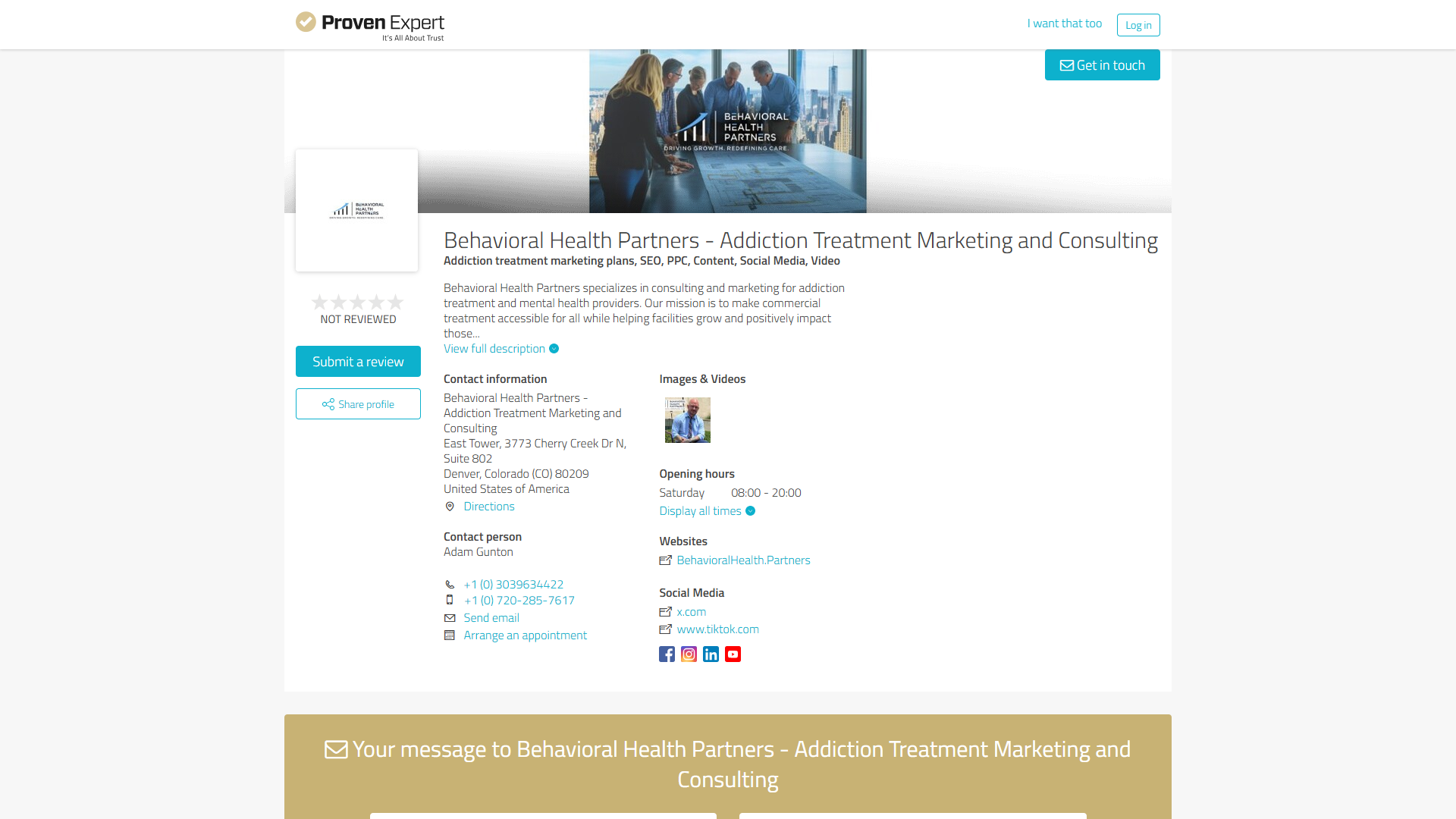
Submitting your therapy practice to local directories and niche-specific listing platforms is essential for improving local search rankings. Sites like Psychology Today, TherapyDen, and Healthgrades allow potential local clients to discover your mental health services when searching for local counseling services.
When creating listings, ensure your practice details are complete and uniform across all platforms. This includes your business name, address, and phone number, often referred to as NAP consistency. Accurate information helps search engines verify your business and improves your position in local search results.
You can further boost visibility by focusing on local link building, where you collaborate with other professionals or local organizations to exchange backlinks. Guest blogging for mental health organizations or participating in community events can generate local service web pages that link back to your site, improving your local search visibility.
Encouraging Client Reviews for SEO Impact
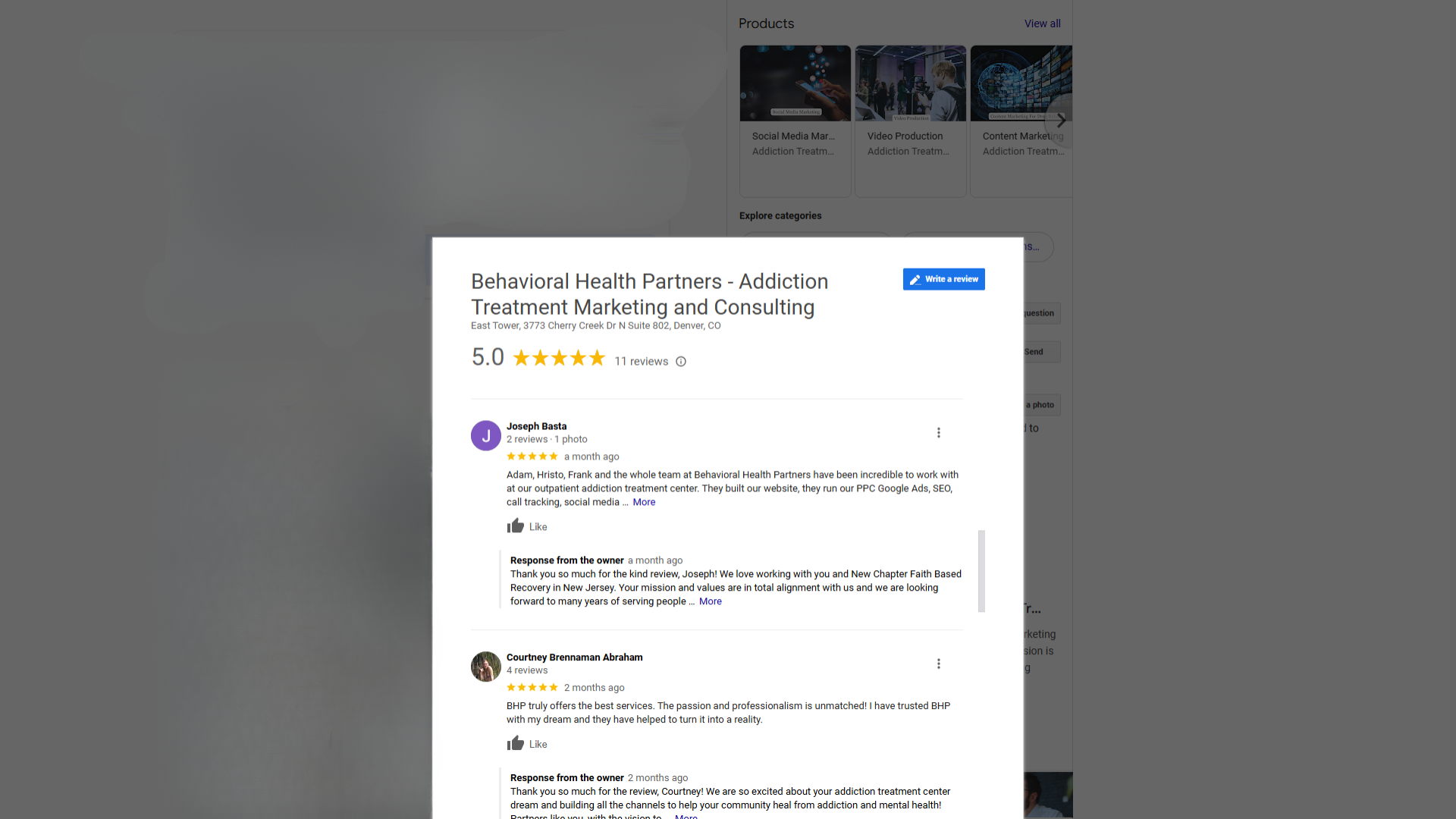
Client reviews significantly influence local search rankings and can set your practice apart in Google search results. Reviews not only provide social proof for potential local clients but also send positive signals to search engines about your practice’s reliability and quality of service.
Encourage satisfied clients to leave reviews directly on your Google Business Profile or other local directories where your practice is listed. Responding professionally to all reviews, both positive and negative, further enhances your reputation and shows mental health clients that you value feedback.
Incorporate specific keywords for local searches in your responses where appropriate, such as: “Thank you for trusting our [City Name] counseling services.” This subtle optimization can contribute to better local search rankings without sounding forced.
Service Area Pages for Multi-Location Practices
If you operate multiple therapy offices, creating local service web pages for each location is essential for effective Local SEO. Each page should highlight the counseling services provided at that location, use local keyword research to target area-specific terms, and provide directions for potential local clients using Google Maps.
NAP Consistency and Why It Matters
NAP consistency refers to keeping your practice’s Name, Address, and Phone Number identical across your website, Google Business Profile, and local directories. Search engines prioritize businesses with consistent details, improving local search rankings.
Even small discrepancies, such as spelling differences or varying formats, can affect your search rankings. Regular audits of your local listings help maintain accuracy, ensuring your practice remains prominent in local search results for mental health services.
Therapy SEO Guide To Reach More Clients

Content Marketing for Therapy Websites
Content marketing plays a critical role in expanding your therapy SEO reach by providing valuable content that answers the needs of your target audience. The goal is to create high-quality content that addresses common mental health concerns while incorporating SEO keywords that match search intent.
A successful content strategy includes resource pages, service descriptions, and educational articles focusing on primary keywords like “counseling for anxiety” or “grief therapy services.” To improve website traffic, ensure your content is structured with proper title tags, meta descriptions, and long-tail keywords targeting specific services or conditions.
Engaging valuable content builds authority within the mental health community and improves search intent alignment, signaling to Google Search Console that your website is a trusted resource. Sharing this content across your social media accounts can further boost visibility and attract new clients.
Blogging Ideas for Therapists to Rank Higher
Consistent blogging is one of the most effective SEO tips for driving website traffic while establishing expertise in the mental health community. Writing blog posts targeting long-tail keywords helps your site appear in Google Search Console for niche queries.
Blog topics that can help you rank higher include:
- “How Therapy Can Help Manage Anxiety Symptoms”
- “5 Signs You May Benefit from Trauma Counseling”
- “The Benefits of Group Therapy for Stress Management”
Ensure each blog post includes optimized title tags, meta descriptions, and SEO keywords that reflect the target audience’s search behavior. Blogging regularly improves visibility, positioning your practice as a go-to resource for therapy SEO.
Using Video Content for Higher Engagement
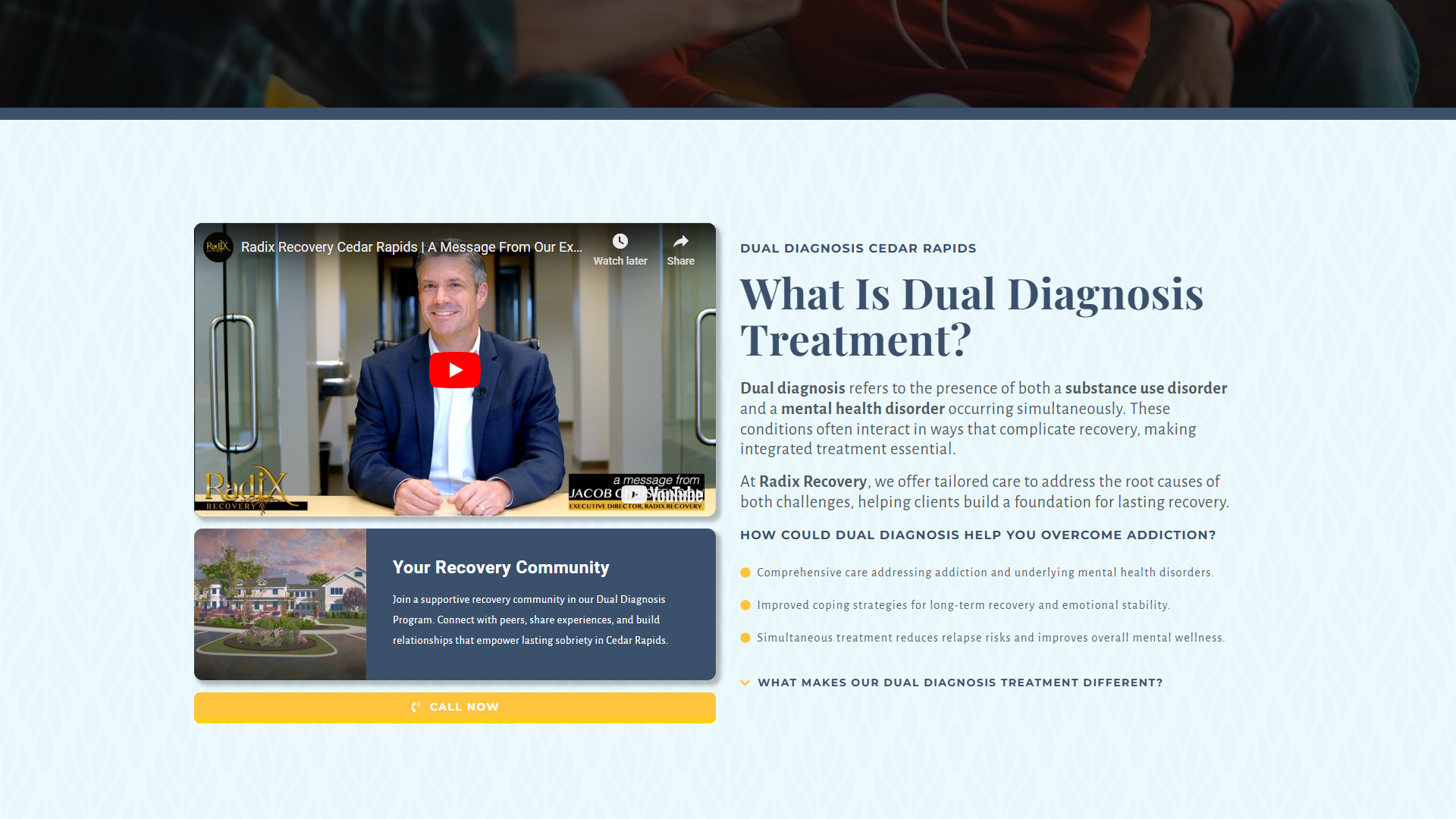
Incorporating video content into your therapy SEO strategy can significantly boost website traffic and engagement. Video helps simplify complex mental health topics, making them more accessible for your target audience while keeping visitors on your site longer.
Consider creating videos such as:
- Explainers on different therapy techniques
- Client success stories (with permission)
- Tips for managing stress or anxiety
Ensure all videos are optimized with SEO keywords in the title, meta descriptions, and title tags to align with search intent. Sharing videos on social media accounts can further increase reach within the mental health community.
Internal Linking Strategies for SEO
Internal linking is the practice of linking one page of your website to another page within the same domain, helping both users and search engines navigate your content more effectively. It improves SEO by distributing link equity across your site, enhancing the visibility of important pages and supporting better search engine rankings.
Internal linking helps boost therapy SEO by connecting related pages on your site, guiding both users and Google Search Console to other valuable content. Linking blog posts to service pages using primary keywords improves search intent alignment and keeps visitors exploring your site longer, boosting website traffic.
How to Use Webinars and Online Workshops for SEO
Hosting webinars and online workshops allows you to create high-quality content that attracts a broader target audience while supporting your therapy SEO efforts. These events can target long-tail keywords like “free stress management workshop” and be promoted through your social media accounts for expanded visibility.
Uploading webinar recordings to your website with optimized title tags, meta descriptions, and SEO keywords ensures long-term visibility in Google Search Console while continuing to serve the mental health community.
Why Google Dominates Other Search Engines

The Power of Google’s Algorithm for Local Businesses
Google’s algorithm is the most advanced in the world, making it the dominant platform for search engine optimization across industries, including therapist SEO. Its sophisticated ranking factors prioritize relevance, user experience, and local SEO, making it easier for mental health professionals to connect with clients actively searching for help.
For local SEO, Google’s algorithm uses factors like proximity, keyword research, and user behavior to deliver the most accurate Google search results for location-based queries. This means that when a potential client searches for “counseling services near me,” Google prioritizes practices with strong technical SEO elements like fast-loading pages, mobile optimization, and secure HTTPS protocols.
Compared to other search engines, Google has a more complex data indexing system that favors high-quality content and properly optimized therapist SEO strategies. This is why focusing on Google’s ranking factors often results in better visibility than relying on alternative platforms.
Why Google My Business Matters Most for Therapists
Google My Business (GMB) is essential for SEO for therapists because it directly influences local SEO rankings and Google search results. When optimized correctly, GMB listings appear in the local map pack, giving mental health practices a prime position above organic search listings.
GMB enables mental health professionals to showcase critical business details such as contact information, operating hours, service areas, and client reviews—all of which contribute to search rankings. By strategically including keyword research insights like “anxiety counseling in [city]” within the GMB description, therapists can further boost visibility in local SEO searches.
Consistent posting on GMB, including updates, offers, and valuable content, can also signal activity to Google’s algorithm. Compared to other search engines, GMB provides a more dynamic, local-focused platform specifically designed for businesses to attract nearby clients searching for mental health services.
Should Therapists Bother with Bing and Yahoo?
While Google search results dominate the digital landscape, other search engines like Bing and Yahoo still capture a small portion of search traffic. However, their algorithms are less sophisticated, and their market share is significantly smaller, making them secondary considerations for SEO for therapists.
Most SEO tools and strategies focus on Google’s algorithm, so ranking well there often translates into visibility on smaller platforms as well. However, some therapist SEO strategies like technical SEO and keyword research can benefit visibility across multiple platforms, particularly if you run Google Ads while optimizing for organic growth.
Ultimately, while it’s not harmful to be listed on other search engines, focusing efforts on Google search results will yield the highest return for mental health professionals seeking local SEO visibility.
SEO for Private Practice, Group Practices, and Large Therapy Organizations

Private Practice SEO Strategies
For therapists running a solo private practice website, implementing targeted SEO for therapists strategies can significantly improve visibility and attract more local clients. The foundation of private practice SEO involves a streamlined website optimized for both users and search engines, with clear service pages focused on your specialties.
A crucial step is the keyword research process, where you use a keyword research tool to identify keywords your audience frequently searches for, such as “anxiety therapy near me” or “grief counseling in [city].” Incorporating these terms naturally into your site’s content, title tags, and meta descriptions helps your site rank for local searches.
Additionally, off-page SEO strategies like securing backlinks from reputable other mental health professionals’ websites can further enhance your site’s authority. Prioritizing site speed, mobile responsiveness, and secure HTTPS encryption ensures both optimal user experience and improved rankings.
Group Practice SEO Optimization
SEO for therapists in a group practice setting requires a slightly broader approach since multiple clinicians and services need visibility under one website. The goal is to ensure that each therapist and specialty has a dedicated, optimized service page that aligns with the keyword research process.
Each private practice website under the group model should target both general and specialized keywords through well-structured content. For example, a group offering trauma counseling, family therapy, and substance abuse treatment can create individual pages targeting identified keywords like “family counseling in [city]” and “substance abuse therapy near [location].”
Local off-page SEO efforts like submitting the practice to directories and professional associations, such as Psychology Today and TherapyDen, can strengthen local visibility. Encouraging each therapist to contribute blog posts related to their specialty while interlinking between service pages helps create a well-rounded SEO for therapists strategy.
Scaling SEO for Larger Therapy Organizations
Larger therapy organizations, such as multi-location counseling centers or national mental health networks, require a more complex SEO for therapists approach to manage visibility across multiple regions and services. The keyword research process becomes critical here, as broader keywords like “mental health services” must be paired with location-specific keywords for regional visibility.
A comprehensive private practice website for a large organization should have separate landing pages for each service and location, targeting identified keywords specific to those areas. For example, pages for “trauma therapy in Denver” and “child counseling in Austin” should be optimized independently.
Technical aspects, such as site speed optimization and mobile-friendliness, are even more critical for large organizations since search engines favor websites that load quickly and provide a seamless experience. Regular content audits can help ensure outdated information is updated, while off-page SEO strategies, like collaborating with other mental health professionals for guest posts and backlinks, can strengthen domain authority across multiple service areas.
Additionally, the keyword research tool plays a pivotal role in scaling efforts by identifying both high-volume and long-tail keywords that may target specialized therapy services, helping the organization remain visible across different service types and regions.
In summary, whether you operate a private practice website, a group therapy center, or a multi-location organization, effective SEO for therapists relies on a strong keyword research process, technical optimization, and consistent off-page SEO efforts tailored to your practice size and client base.
Common SEO Mistakes Therapists Make (and How to Avoid Them)

Ignoring Local SEO Essentials
A common mistake many therapy practices make is neglecting the importance of local search optimization. Failing to optimize for area-specific search terms can result in losing visibility to nearby competitors offering similar counseling services. Without location-specific optimization, search platforms may struggle to determine where your practice is based, limiting your visibility for local searches.
To avoid this, ensure your practice is listed on local business directories and professional platforms relevant to the therapy industry. Consistency in your business name, address, and contact details across all listings improves credibility with search platforms and helps your practice appear in local map results. Additionally, regularly updating location-based service pages and encouraging reviews from local clients can strengthen your presence for geographically focused searches.
Overloading Keywords in Content
Keyword stuffing—or excessively cramming relevant keywords into your website content—can harm both user experience and search rankings. Search engines prioritize content that feels natural and informative, while keyword overuse often comes across as forced and spammy. This practice can confuse readers, reduce readability, and may even lead to penalties, causing your rankings to drop.
Instead of overloading text with target keywords, focus on creating informative, client-focused content that naturally integrates key terms. A strategic approach involves using variations of core search terms while maintaining a conversational tone. Effective placement includes headings, subheadings, and image descriptions where the terms flow organically. Quality content that speaks directly to the reader’s needs is more effective than keyword-heavy writing.
Failing to Track and Adjust SEO Efforts
One of the most critical mistakes therapists make is failing to monitor their SEO performance over time. SEO isn’t a one-time setup but an ongoing process requiring adjustments based on performance data. Without proper tracking, it’s difficult to know which pages are driving traffic or whether link building strategies are effective.
To avoid this, regularly review analytics tools that provide insights into site performance, including traffic sources and user behavior. Tracking metrics like page views, bounce rates, and search rankings helps identify which pages resonate with potential clients and which need improvement.
Adjustments should include refining your content marketing strategy, improving underperforming service pages, and revisiting outdated material with fresh, informative updates. Staying proactive ensures your practice remains competitive and continues to connect with people seeking counseling services.
Advanced SEO Techniques for Expanding Your Therapy Reach

Implementing Schema Markup for Therapists
Schema markup is an advanced SEO technique that helps search platforms better understand and categorize your website’s content. For therapy practices, it allows you to highlight essential details such as services offered, operating hours, and service areas directly in search listings.
By adding structured data to your website’s code, search platforms can display enhanced snippets, such as star ratings, appointment links, and service descriptions, which make your practice stand out in results. Implementing schema markup can also improve click-through rates by providing potential clients with more information before they even visit your site. This strategy is particularly useful for therapy centers offering multiple services like trauma counseling, anxiety therapy, and couples counseling.
Leveraging Backlink Strategies for Therapy Websites
Building quality backlinks from reputable websites is crucial for expanding your online authority and improving search visibility. Backlinks serve as endorsements, signaling to search platforms that your content is valuable and trustworthy.
To effectively leverage backlinks, focus on collaborating with other mental health professionals, local community organizations, and industry-specific websites. Writing guest articles for professional journals or participating in podcasts related to mental health can generate high-quality backlinks that strengthen your site’s credibility.
Additionally, submitting your site to professional directories and therapy-focused platforms helps reinforce your online presence while supporting your broader SEO efforts.
Paid SEO Tools for Faster Growth
Investing in paid SEO tools can help streamline and accelerate your digital marketing efforts by offering deeper insights and automation features. Tools like Ahrefs, SEMrush, and Moz provide advanced data for keyword discovery, backlink analysis, and content performance tracking.
These platforms help you identify optimization gaps, monitor target keywords, and gain insights into competitor strategies, enabling you to adjust your campaigns for better visibility. For therapy practices aiming to scale quickly, using paid tools alongside standard optimization efforts can significantly enhance your reach and help attract more potential clients.
When To Hire a Behavioral Health SEO Agency

Signs Your DIY SEO Isn’t Working
While many therapists attempt to handle SEO independently, certain signs indicate it might be time to seek professional help. If your website struggles to appear in search results despite consistent content efforts or target keywords not ranking well, it could point to deeper optimization issues.
Common red flags include low website traffic, poor visibility in local searches, stagnant rankings, and minimal engagement from potential clients. Additionally, technical challenges like slow site speed, broken links, or missing schema markup can hold back your practice’s performance. If you’re spending excessive time on SEO without seeing measurable results, outsourcing to a specialized agency can free up time and provide expert strategies.
The Benefits of Working with Behavioral Health Partners
Hiring a professional agency like Behavioral Health Partners offers specialized expertise in SEO for therapists and mental health professionals. Our tailored strategies focus on optimizing service pages, improving local SEO rankings, and implementing advanced techniques like link building and schema markup to enhance visibility.
With extensive experience in the behavioral health industry, our team understands how to position your practice for growth while aligning your content with what potential clients are searching for. Our data-driven approach includes in-depth keyword analysis, regular performance monitoring, and adjustments to ensure long-term success.
By partnering with a dedicated agency, you gain not just SEO services but a strategic partner committed to expanding your reach and helping you make a greater impact in your community.
How to Get Started with Behavioral Health Partners
Getting started with Behavioral Health Partners is straightforward and designed to deliver impactful results quickly. Apply for a free consultation today to have your current website performance evaluated and uncover key areas for improvement.
Following the consultation, the team will develop a customized SEO strategy aligned with your practice’s specific goals, focusing on content optimization, local SEO enhancements, and technical SEO adjustments. Take the next step in expanding your reach—apply now and let Behavioral Health Partners help you grow your practice with expert-driven strategies.